

Best Lenders for a Personal Loan After Bankruptcy: 2026 Ranking
Last updated: 2026-11-05
Coming out of bankruptcy feels like stepping out of a dark tunnel into sudden sunlight. That first step forward often reveals a mountain of debt or unexpected bills that demand cash right away. Finding a lender willing to look past a discharged debt is the biggest hurdle for Americans trying to rebuild their lives.
The mental weight of bankruptcy can be just as heavy as the financial one. This often leads to a sense of paralysis when facing milestones like securing an auto loan for work or a personal loan for home repairs. You aren’t just fighting numbers; you are fighting the fear of falling back down.
Picking a lender involves more than hunting for the lowest interest rate. You have to balance how fast you get the money against the likelihood of getting approved at all. It is a delicate dance between speed, terms, and your specific credit history.
For instance, a traditional bank might offer a 7% interest rate, but they usually demand a two-week vetting period and a pristine FICO score. An alternative lender might hand over funds within 24 hours, but they might charge a 25% rate to do it. Understanding this trade-off is the core of strategic financial rebuilding.
- Prosper
- Avant
- FastLendGo
- World Finance
- Credit Human
- King of Kash
How These Lenders Were Evaluated
We focused on accessibility for people dealing with the aftermath of a bankruptcy filing. Traditional banks often turn a blind eye to recent credit events. They frequently view a Chapter 7 or Chapter 13 discharge as a permanent red flag, which pushes borrowers toward other options.
Our selection shifted toward peer-to-peer platforms, specialized online lenders, and credit unions. These entities often use alternative data to assess risk instead of just looking at a FICO score. This includes your history of utility payments, rent, or even steady employment patterns that show stability despite past insolvency.
Each entry was judged on how fast funds arrive, the maximum loan amounts, and the application speed. We wanted to find a full spectrum of options, from large, structured personal loans to small, quick-access cash for emergencies. Transparency regarding credit impact during the pre-qualification stage was non-negotiable.
We looked specifically for lenders that use “soft inquiries” during the initial stages. This allows you to shop around without further damaging a fragile credit score. It is better to know your options before you commit to a hard inquiry that leaves a mark on your report.
| Lender Name | Loan Amounts | Funding Speed | Credit Requirements |
|---|---|---|---|
| Prosper | $2,000 – $50,000 | Fast funding | See site |
| Avant | See site | See site | See site |
| FastLendGo | See site | Quick access | Bad Credit/Fair Credit |
| World Finance | See site | See site | See site |
| Credit Human | See site | See site | Member-owned |
| King of Kash | See site | One business day | No traditional credit check |
Top-Rated Lenders for Rebuilding Credit
1. Prosper
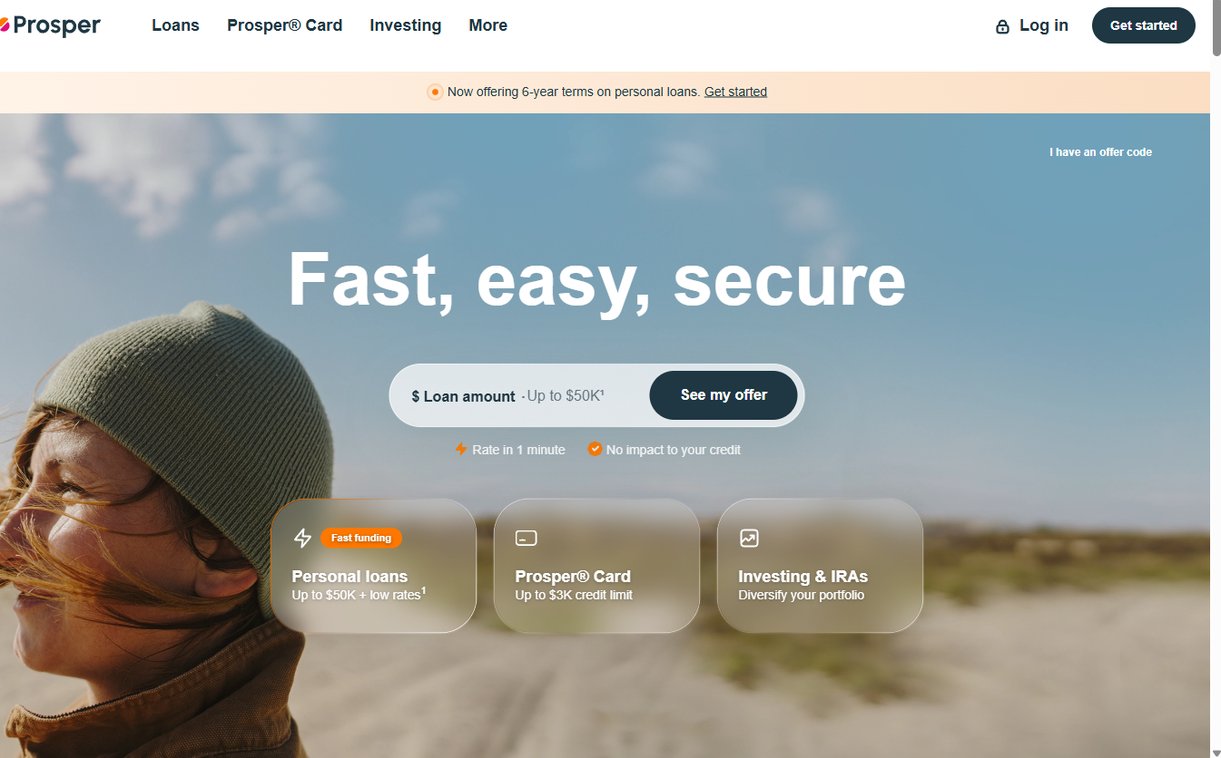
Prosper works as a peer-to-peer (P2P) lending platform. This means individual investors fund your loan instead of a traditional bank. This structure often provides more flexibility for those with non-traditional credit histories. Because you are borrowing from people rather than an institution with rigid, automated algorithmic barriers, there is often more nuance in the approval process.
They offer competitive options for those looking to consolidate debt or cover major life expenses like tuition or medical bills. The platform is quite robust, offering terms that can stretch up to six years. This makes monthly payments much more manageable for someone just coming out of bankruptcy.
Lower monthly outflows help preserve cash flow for daily living expenses. It is a solid choice if you need a substantial amount of money and want to check your rates without hurting your score. The process is digital-first, so you can often see potential terms within minutes of submitting your basic information.
Pros:
- Loan amounts up to $50,000
- Up to 6-year terms available
- No impact to credit score when checking rates
Cons:
- Peer-to-peer model may have variable approval rates
2. Avant
Avant focuses on helping people move forward financially with tools tailored to unique life journeys. They understand that a single financial event, like bankruptcy, does not define a person’s entire future. Their services include credit cards and installment loans designed for various life stages.
They specifically target those who fall into the “fair” to “good” credit categories but might have been hindered by past setbacks. This makes them an excellent bridge for those who have moved past a bankruptcy discharge but haven’t yet reached the elite FICO scores required by major national banks.
The company acts as a partner in your financial journey, offering debt consolidation and emergency loan options. This makes them a versatile option for someone looking to streamline their finances after a difficult period. By consolidating multiple small debts into one single monthly payment, you can simplify your budgeting and potentially reduce the total interest paid across several high-interest accounts.
Pros:
- Flexible choices for different needs
- Offers debt consolidation solutions
- User-friendly digital tools
Cons:
- Terms and rates are highly dependent on individual profile
3. FastLendGo
When time is of the essence, FastLendGo helps you compare local options or apply online quickly. They cater to a wide range of credit profiles, including those with bad or fair credit. This makes them a go-to when you need cash for specific needs like auto repairs or dental work.
For a person rebuilding after bankruptcy, an unexpected car repair can often trigger a cycle of new debt. FastLendGo aims to prevent that spiral by providing a controlled lending option. They focus on those who need quick financing for essential maintenance that keeps you employed or healthy.
The service is built for speed. Whether you need a small $500 loan for an urgent bill or a larger sum for a home necessity, their model addresses immediate liquidity needs. They act as a middleman that streamlines the search process, saving you hours of visiting individual lenders who might not fit your specific credit profile.
Pros:
- Covers various needs like auto, dental, and roof financing
- Options for bad credit and fair credit
- Fast comparison of local options
Cons:
- Focus on quick access may imply higher interest costs
4. World Finance
World Finance operates within a complex global financial landscape, offering services that cater to different tiers of banking. While they deal with massive institutional sectors, their presence in the retail space provides a wide net of financial products. This allows them to serve a variety of economic demographics.
They serve everyone from high-net-worth individuals to those in the subprime market looking for immediate relief. Navigating their specific retail offerings requires understanding their specialized financial models. Their presence in the market ensures that even in fluctuating economic climates, there are structured paths available for various credit needs.
Pros:
- Wide breadth of financial expertise
- Extensive global financial presence
- Diverse range of banking sectors
Cons:
- May be more geared toward complex financial structures
5. Credit Human
As a member-owned federal credit union, Credit Human operates with a different philosophy than big-box banks. They focus heavily on financial health and providing tools to help members manage everyday spending. This community-focused approach can be refreshing after a bankruptcy experience.
In bankruptcy, a borrower may have felt like a mere number in a massive database. Credit unions are non-profit entities, which often means their primary goal is to serve the members rather than maximize shareholder dividends. Being a member means you are part of the institution, which often translates to more personalized support.
They offer everything from checking accounts to sustainable savings options, helping you build a foundation for the future. If you are looking for a long-term relationship to help rebuild your credit from the ground up, a credit union is often the most stable and supportive environment for that growth.
Pros:
- Member-owned structure
- Focus on long-term financial health
- Sustainable and identity-protecting tools
Cons:
- Membership requirements may apply
6. King of Kash
King of Kash is designed for those who need cash immediately and cannot wait for traditional banking bureaucracy. They specialize in personal installment loans that do not require collateral or a traditional credit check. This makes them an outlier for those with very recent bankruptcies who find themselves locked out of every other form of credit.
While most lenders look backward at your history, King of Kash looks at your current capacity. The approval process is based on your ability to repay the loan rather than your past credit history. This is often determined by looking at your current income, employment stability, and bank statement history.
If you are approved, you can often get your money in as little as one business day through direct deposit or local pickup. It is an ideal solution for true emergencies where the cost of waiting is higher than the cost of the interest.
Pros:
- No traditional credit check required
- No loan origination fees
- Lightning-fast approval and funding
Cons:
- Approval is strictly tied to repayment ability
Strategic Steps for Rebuilding Credit After Bankruptcy
Rebuilding credit is not a sprint; it is a marathon that requires disciplined, strategic moves. Once you have navigated the initial stage of securing emergency funds, your focus should shift to long-term credit scoring improvement. Here is a step-by-step approach to maximizing your recovery:
- Step 1: Audit Your Reports. Check all three bureaus. Look specifically for “discharged” status on your old debts. If a debt that was part of your bankruptcy is still appearing as “active” or “unpaid,” it will continue to drag down your score. Disputing these errors is your first line of defense.
- Step 2: Utilize Secured Credit Cards. If you are still finding it difficult to get approved for unsecured lines of credit, consider a secured card. You provide a small deposit, such as $200, which serves as your credit limit. This is a low-risk way to prove you can handle credit, as your deposit is held as collateral.
- Step 3: Automate Your Payments. After bankruptcy, a single late payment can feel like a catastrophe. Set up autopay for every single bill, even the small ones like cell phone or internet. Consistency is the single most important factor in building a new credit history.
- Step 4: Maintain Low Credit Utilization. If you are granted a credit card, try to use it for only one small subscription per month and pay it off in full. Keeping your balance below 30% of your limit, and ideally below 10%, is vital for increasing your score quickly.
Understanding the Total Cost of Borrowing
When you are in a position of financial recovery, the temptation is to focus solely on the monthly payment. You might see a loan offer for $50 a month and think it is manageable. However, you must calculate the APR (Annual Percentage Rate) and the total interest paid over the life of the loan.
This is especially crucial when dealing with lenders that offer quick access to cash, as these products often carry significantly higher interest rates than traditional personal loans. To properly evaluate a loan, use this simple comparison method:
| Metric | Standard Personal Loan | High-Speed/Bad Credit Loan |
|---|---|---|
| Monthly Payment | Lower | Higher |
| Interest Rate (APR) | Moderate (10% – 25%) | High (30% – 80%+) |
| Total Repayment | Predictable/Lower | Potentially double the principal |
Before signing any agreement, ask the lender: “What is the total amount I will have paid back by the end of this term?” If the answer is significantly higher than what you borrowed, you must decide if the immediate convenience is worth the long-term cost. For many, the answer is yes for an emergency car repair, but no for a non-essential purchase.
Using high-interest debt to fund lifestyle purchases is one of the fastest ways to slip back into the financial instability that led to bankruptcy in the first place. Financial recovery is about rebuilding your capacity to handle debt, not just acquiring more debt to solve immediate problems.
Navigating the Path to Approval
Before you start applying, it is vital to get a clear picture of where you stand. Order your credit reports from all three major bureaus to ensure there are no errors from your bankruptcy filing. Small mistakes in your report can be the difference between an approval and a rejection.
For example, if a creditor failed to report your bankruptcy discharge correctly, it might look like you are still actively defaulting on old debts. This is a major red flag for lenders. You want your records to be as clean as possible before you start knocking on doors.
Avoid the temptation to apply for multiple loans at once, as this can trigger multiple hard inquiries on your credit report. Each hard inquiry can shave points off your score. Instead, use the pre-qualification tools offered by lenders like Prosper or Avant to see your potential rates without affecting your score.
This “soft pull” approach keeps your credit profile intact while you shop around. Think of pre-qualification as a “test drive” for your creditworthiness. It allows you to see the landscape before you commit to the journey. One major mistake to avoid is ignoring the total cost of the loan; a lender might offer quick cash with no credit check, but the interest rates can be staggering.