

Top 6 Lenders for Holiday Loans for Bad Credit in 2026
Last updated: 2026-11-10
The holiday season often brings a sudden surge in expenses that can strain even the most careful budgets. Between gift shopping, travel costs, and festive gatherings, the financial pressure can feel overwhelming. Many people find themselves looking for quick liquidity to bridge the gap before the new year arrives. Whether it is the unexpected cost of a last-minute flight to visit family, the rising price of premium groceries for a holiday feast, or the pressure to provide meaningful gifts for children, the seasonal “cash crunch” is a real phenomenon that hits households across the country.
Finding a loan when your credit score isn’t perfect requires a keen eye for detail. It is not just about finding money quickly; it is about finding a way to borrow that does not lead to a cycle of debt. Borrowing based on impulse rather than necessity can lead to a “debt spiral,” where you take out a new loan to pay off the interest of an old one. This ranking focuses on accessibility and speed for those needing a festive boost, prioritizing lenders that offer transparency and manageable repayment structures.
- OneMain Financial
- FastLendGo
- Radcred
- Mariner Finance
- SCU Credit Union
- Credit Union West
How These Holiday Lenders Were Evaluated
Selecting the right lender involves looking beyond just the interest rate. For this roundup, the focus remained on how easily a borrower with less-than-ideal credit can secure funds. Speed of funding is a massive factor when a holiday deadline is looming, so the ability to get cash quickly was prioritized. In the modern digital economy, waiting five to seven business days for a bank transfer can mean missing a deadline for a seasonal sale or a travel booking.
The evaluation also considered the variety of loan amounts and terms available. A lender that offers small, manageable amounts might be better for a quick gift purchase, while larger sums are better for travel. For instance, a $1,000 personal loan is ideal for covering a utility bill or a small shopping spree, whereas a $10,000 loan is more appropriate for consolidating higher-interest credit card debt accrued during the holidays. Accessibility through physical branches versus purely digital platforms was also a key part of the comparison. Those who prefer a face-to-face explanation of terms may find value in brick-and-mortar institutions, while those working irregular holiday shifts might prefer the 24/7 availability of an online platform.
| Lender Name | Loan Amounts | Interest Rates/Terms | Funding Speed | Credit Requirements |
|---|---|---|---|---|
| OneMain Financial | $1,500 – $35,000 | Starting at 11.99% APR; 24-60 months | As soon as 1 hour after signing | Accepts bad credit |
| FastLendGo | See site | See site | See site | Small, Fair, and Good Credit options |
| Radcred | See site | See site | Fast decisions via AI | Varies by eligibility |
| Mariner Finance | Up to $25,000 | See site | See site | Soft credit inquiry for offers |
| SCU Credit Union | See site | As low as 5.49% APR (auto) | See site | Debt consolidation available |
| Credit Union West | See site | See site | See site | See site |
The Best Lenders for Seasonal Borrowing
1. OneMain Financial
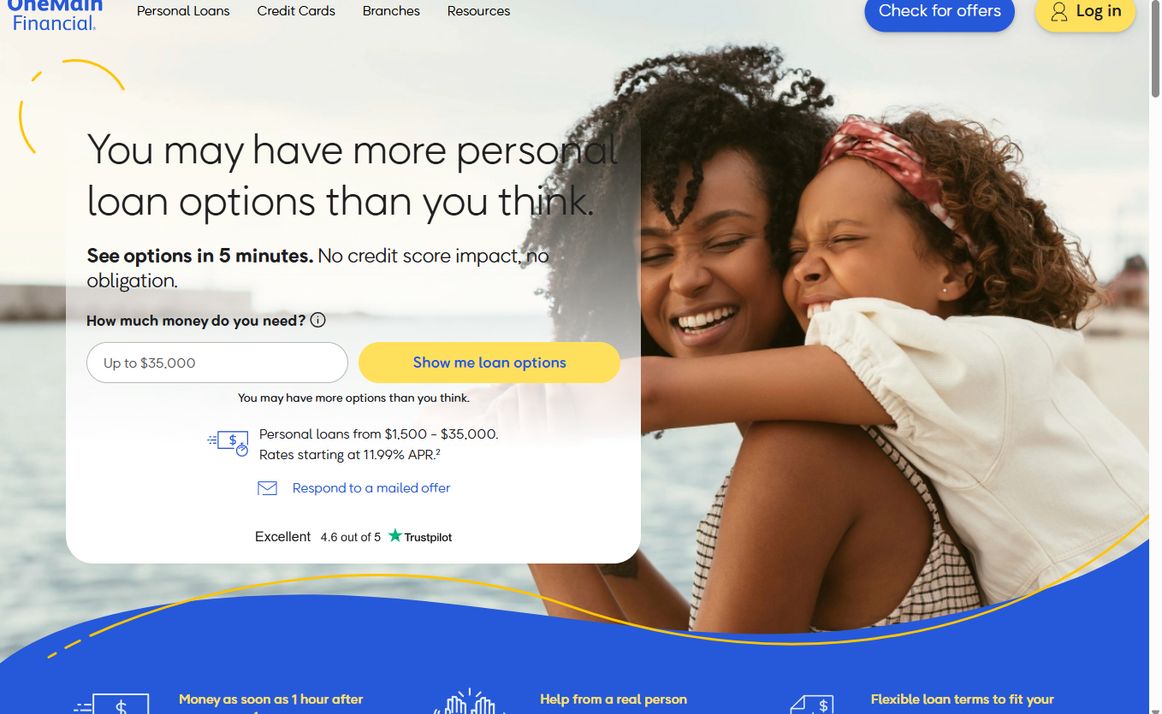
OneMain Financial stands out for those who prefer a mix of digital convenience and human interaction. With over 1,300 branches, they provide a safety net that purely online lenders often lack. This is perfect for someone who wants to sit down and talk through their repayment plan face-to-face. If you are unsure whether a 36-month or a 60-month term is better for your monthly cash flow, an in-person loan officer can walk you through the math in real-time.
They offer substantial amounts ranging from $1,500 to $35,000, which can cover significant holiday travel or home upgrades. The ability to receive funds as soon as one hour after signing the loan is a massive advantage during an emergency. This speed is particularly helpful if you are facing a sudden repair cost—like a broken furnace in mid-December—that must be addressed immediately to keep a household running.
Pros:
- Extensive branch network for in-person support.
- Fast funding options for urgent needs.
- Flexible terms from 24 to 60 months to fit different budgets.
Cons:
- Requires a more formal application process compared to some mobile-first apps.
2. FastLendGo
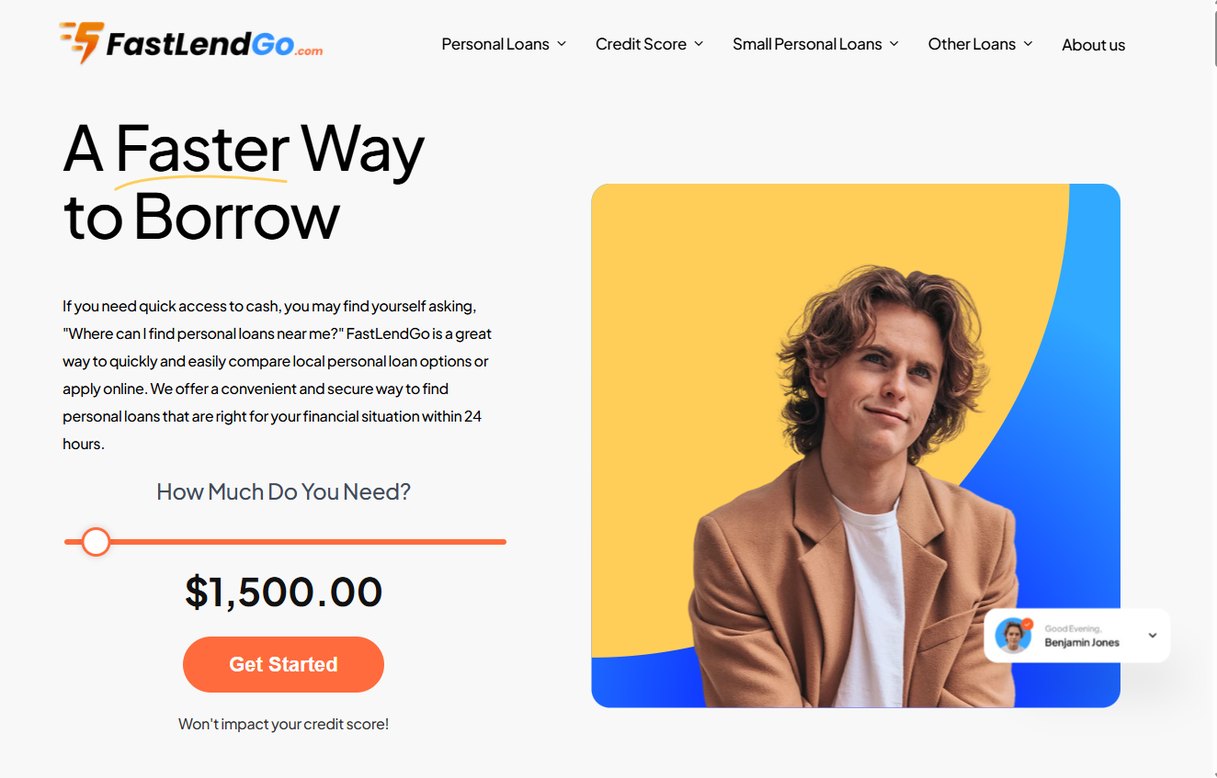
FastLendGo helps those who need specific, smaller amounts of cash. Whether you need a $500 boost for a single gift or a larger $5,000 sum, they cater to various financial needs. Their platform is designed to help you compare options quickly, acting as a digital intermediary that simplifies the search process. Instead of visiting five different websites, you can use their interface to see a snapshot of what is available to you. (fastlendgo.com)
This lender is particularly useful for those who may be struggling with traditional banking hurdles, such as strict minimum credit scores or high monthly income requirements. They offer various tiers of credit options, making them a versatile choice for a wide range of borrowers, from those with “fair” credit to those with “good” credit who are simply looking for a quick liquidity boost for seasonal shopping.
Pros:
- Multiple loan amount tiers available to suit specific needs.
- Designed for quick comparison of local options.
- Covers various needs from dental to auto repair.
Cons:
- Focus is primarily on digital comparison rather than direct lending in all cases.
3. Radcred
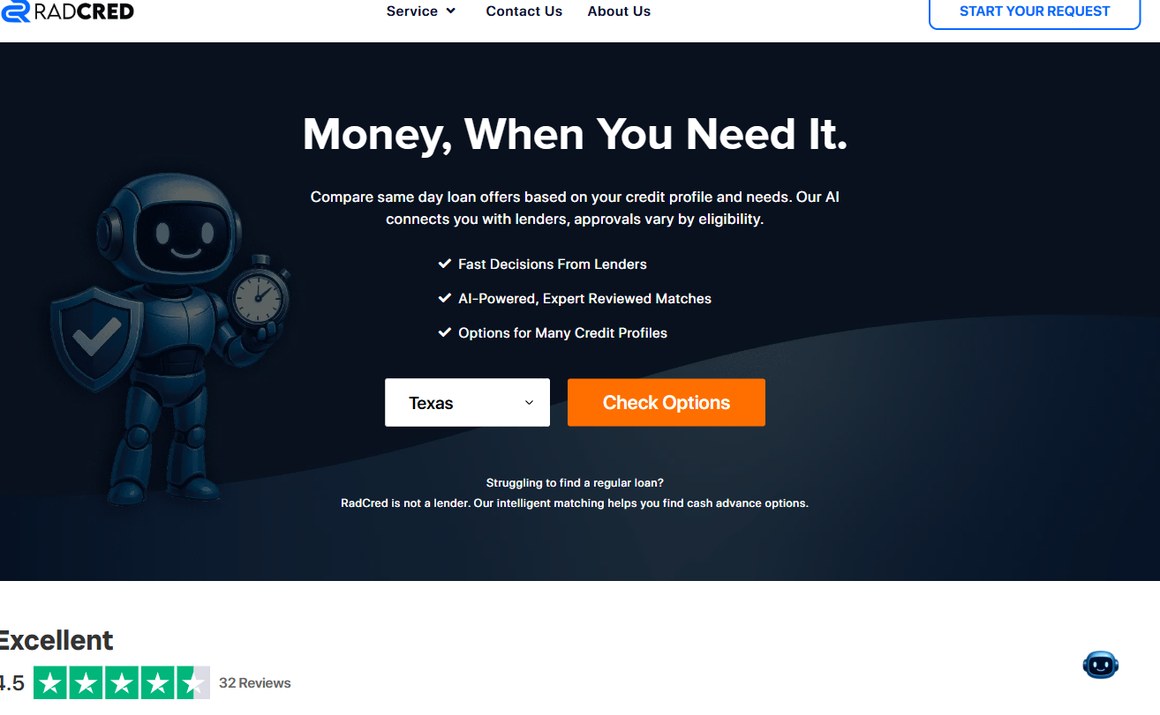
Radcred utilizes AI technology to match borrowers with cash advance options. This is a highly efficient route for people who do not want to spend hours filling out traditional paperwork or waiting for manual reviews. The platform is built for speed and modern convenience, utilizing algorithms to scan for lending opportunities that align with your profile in seconds rather than days.
Because they use intelligent matching, they can connect users with various lenders based on their specific profiles. This can be a lifesaver when traditional banks have already said no, providing a fresh perspective on your eligibility. For example, an AI might identify a specific lender that weighs income stability differently than a traditional credit score, opening doors that a human loan officer might overlook during a standard review.
Pros:
- AI-powered matching for fast decisions.
- Easy-to-use interface designed for mobile and desktop.
- Good for those seeking quick cash advances.
Cons:
- Not a direct lender, meaning approval depends on third-party matches.
- APR can be higher than traditional personal loans due to the speed and matching nature.
4. Mariner Finance
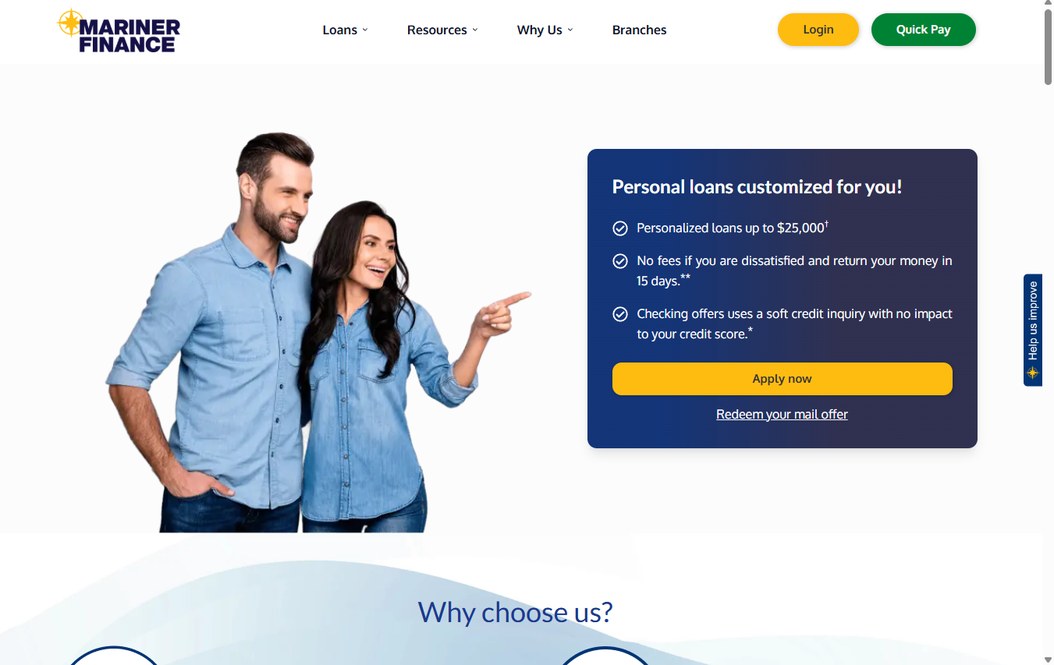
Mariner Finance offers a personalized touch with their customized loan offers. They understand that no two financial situations are identical, so they focus on tailoring the loan to the individual’s needs. This can help make monthly payments feel much more manageable. If you are borrowing for a one-time seasonal expense, they can help you structure a plan that doesn’t leave you struggling in January and February.
A major benefit here is the ability to check offers using a soft credit inquiry. This means you can see what you might qualify for without hurting your credit score, which is a vital protection when shopping around. Many borrowers make the mistake of applying for multiple loans to compare rates, only to find their score has dropped because each application triggered a “hard” inquiry. Mariner Finance mitigates this risk.
Pros:
- Soft credit inquiry for initial offers, protecting your score.
- 15-day satisfaction guarantee.
- Up to $25,000 in personalized loans.
Cons:
- The satisfaction guarantee requires returning money within a tight 15-day window.
5. SCU Credit Union
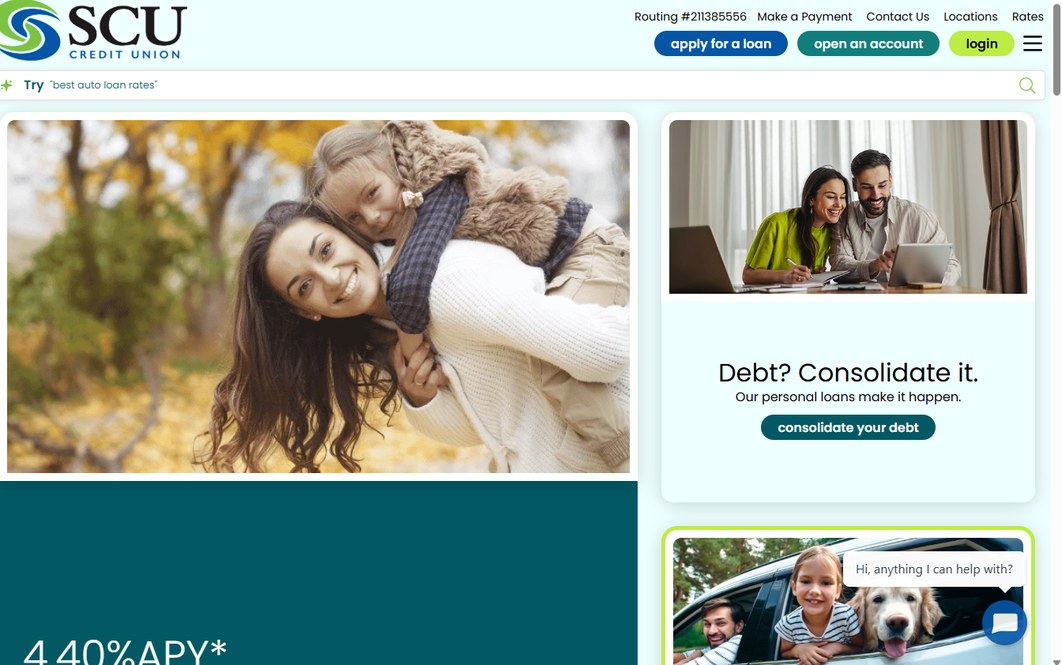
Credit unions are often the hidden gems of the lending world. SCU Credit Union focuses on helping members build their careers and improve their credit through various financial products. They are an excellent choice if your holiday loan is part of a larger debt consolidation plan. Instead of taking out a high-interest personal loan for gifts, you might use a credit union to consolidate existing high-interest debt, effectively lowering your overall monthly obligation.
Their products range from personal loans to auto financing, making them a comprehensive partner for long-term financial health. They provide a sense of community that is often missing from large, impersonal financial institutions. Because credit unions are member-owned, their primary motivation is serving the member rather than maximizing shareholder profits, which can lead to more favorable terms for those who meet their membership criteria.
Pros:
- Competitive rates for specific products like auto loans.
- Strong focus on debt consolidation and credit building.
- Member-oriented service that feels personalized.
Cons:
- Membership requirements may apply based on location or employment.
6. Credit Union West
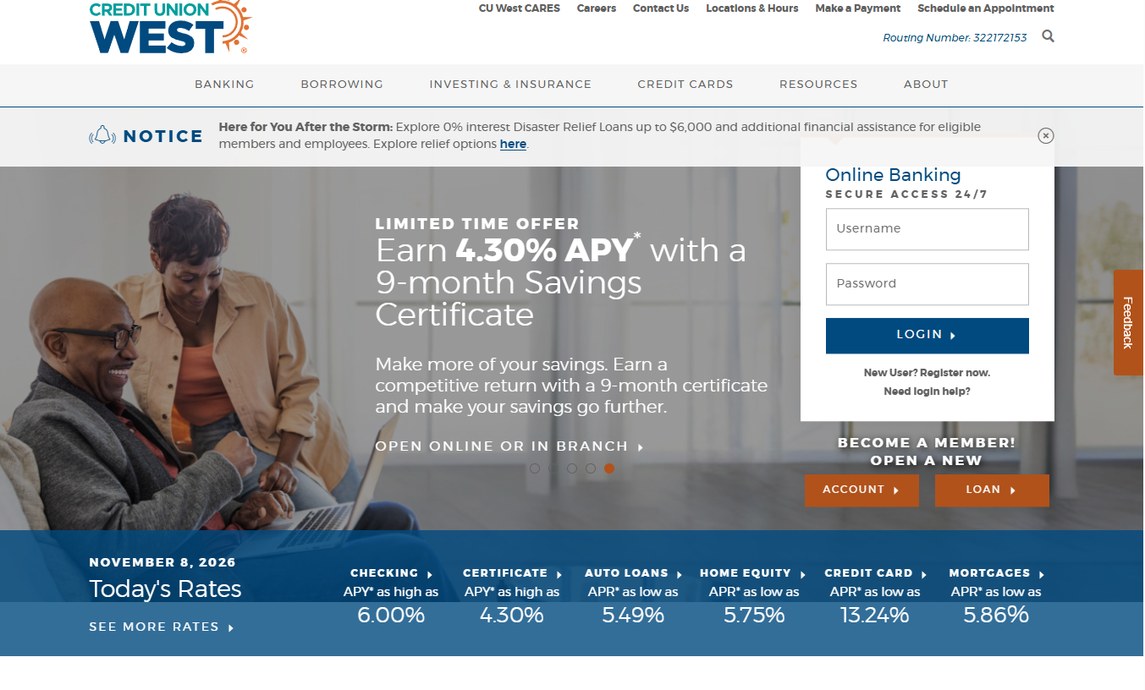
Credit Union West is a solid option for those who value stability and community support. They offer specialized assistance, such as disaster relief loans, which highlights their commitment to their members during tough times. This level of empathy is a refreshing change in the industry, especially when life throws an unexpected curveball right in the middle of the holiday season.
While they offer standard banking and borrowing services, their focus remains on the well-being of their members. This makes them a reliable choice for those looking for a long-term banking relationship rather than just a quick fix. They are ideal for borrowers who are looking to grow with a financial institution over many years, rather than just needing a one-off transaction.
Pros:
- Specialized relief options for members in need.
- Comprehensive range of banking and investing services.
- Strong community presence and stability.
Cons:
- May have stricter membership eligibility than online-only lenders.
Comparing Loan Types: Personal vs. Credit Card vs. Line of Credit
When facing holiday expenses, it is helpful to understand which type of borrowing fits your specific situation. Not all debt is created equal, and choosing the wrong vehicle can significantly increase your interest costs.
| Feature | Personal Loan | Credit Card | Line of Credit |
|---|---|---|---|
| Interest Rate | Fixed and generally lower | Variable and generally higher | Variable, usually moderate |
| Repayment Style | Fixed monthly installments | Minimum payments or full balance | As needed, as you pay it back |
| Best For… | Large, predictable expenses (Travel) | Small, daily seasonal purchases | Unpredictable or ongoing needs |
For example, if you know you need exactly $3,000 for a family trip in December, a personal loan is often the superior choice because the fixed interest rate allows you to budget precisely for your monthly payments. Conversely, if you are constantly making small, varying purchases throughout the month, a credit card might offer more flexibility, provided you can pay the balance in full to avoid high interest.
Avoiding Common Pitfalls When Borrowing
Before you sign any agreement, it is vital to read the fine print. Many people get caught up in the excitement of immediate cash and forget to look at the total cost of the loan. Always check the APR, as this represents the true cost of your borrowing over the life of the loan. The APR includes not just the interest rate, but also any origination fees or administrative costs that are tacked onto the loan. A lender might advertise a low interest rate, but if they charge a 5% origination fee upfront, your actual cost of borrowing is much higher than it appears on the surface.
One common mistake is borrowing more than you can realistically repay. Holiday spending is often temporary, but loan payments are a long-term commitment. It is easy to justify a larger loan when you are looking at a pile of gifts, but it is harder to justify that same amount when you are facing your mortgage or rent payment in February. Ensure your monthly budget can handle the new installment without sacrificing necessities like food or rent. A good rule of thumb is to ensure that your total debt-to-income ratio remains within a healthy range, typically under 36%.
Another pitfall is failing to account for the “aftermath” of the holiday season. Many people experience a “financial hangover” in January when the holiday excitement fades and the bills arrive. If you take out a loan to cover seasonal expenses, try to set aside a small amount of money each month starting in January to begin paying down that debt faster. This proactive approach prevents the loan from dragging on for its full term and costing you significantly more in interest.
Lastly, always compare multiple offers. Just because one lender says no does not mean another will. Lenders have different risk tolerances and different ways of calculating eligibility. Using soft credit inquiries, like those offered by Mariner Finance, allows you to shop around without damaging your credit score, giving you the upper hand in finding the best deal. By taking the time to compare, you move from being a reactive borrower to a strategic one, ensuring that your festive boost doesn’t become a financial burden.