

Top 5 Lenders for 12 Year Personal Loan Options in 2026
Last updated: 2026-11-10
Hunting for a lender that plays nice with a decade-long repayment plan feels like looking for a needle in a haystack. Most traditional banks prefer shorter cycles, usually 36 or 48 months, because it keeps their risk low. If you need more breathing room, you have to look for specific types of flexibility.
People who choose longer windows usually prioritize a manageable monthly payment over the total interest paid over ten years. This strategy works well for massive debt consolidation or home renovations where a huge upfront cost would break the budget. Just remember that stretching a loan out longer means you are trading a smaller monthly bill for a much higher total cost of capital.
Finding the right partner means looking past the glossy ads. You need to understand how interest rates shift over time and watch out for hidden fees. Some lenders dangle a low introductory rate only to spike it after the first year. Others might take an origination fee right off the top, meaning you get less cash than you actually borrowed.
Whether you are cleaning up old debt or funding a major life milestone, the real story is in the fine print. Always check the Annual Percentage Rate (APR) instead of just the interest rate. Since the APR includes those extra fees, it gives you the actual truth about what this borrowing will cost you in the long run.
- JetzLoan
- OneMain Financial
- Capital One
- SoFi
- Splash Financial
How These Lending Options Were Evaluated
We focused on how easy it is to get approved, how fast you get the money, and which credit scores actually get a seat at the table. A lender that only talks to people with perfect credit isn’t helpful to the average person. A borrower with a 620 score faces a totally different reality than someone with an 800 score.
Our goal was to provide a full spectrum of options. We prioritized lenders that offer a clear path from the moment you click apply to the moment the cash hits your bank account. This applies whether you are a prime borrower or someone working with subprime credit.
Speed matters a lot in this economy. Waiting weeks for a wire transfer is a dealbreaker for most people. We looked for providers that close the gap between getting a “yes” and seeing the funds in your account. We checked if they use fast ACH transfers for next-day funding or if they still rely on slow, old-fashioned paper checks.
The best lenders make things easy with digital document signing and fast income verification. You want an emergency loan to become a reality within the same business week, not a month. We looked for efficiency in every step of the process.
| Lender | Loan Amounts | Max Terms | Funding Speed | Credit Requirements |
|---|---|---|---|---|
| JetzLoan | $500 – $35,000 | See site | As little as 24 hours | No hard credit pull for rates |
| OneMain Financial | $1,500 – $35,000 | 60 months | As soon as 1 hour | See site |
| Capital One | See site | See site | See site | See site |
| SoFi | See site | See site | See site | See site |
| Splash Financial | See site | See site | See site | See site |
The Top 5 Lenders for Long-Term Personal Loans
1. JetzLoan
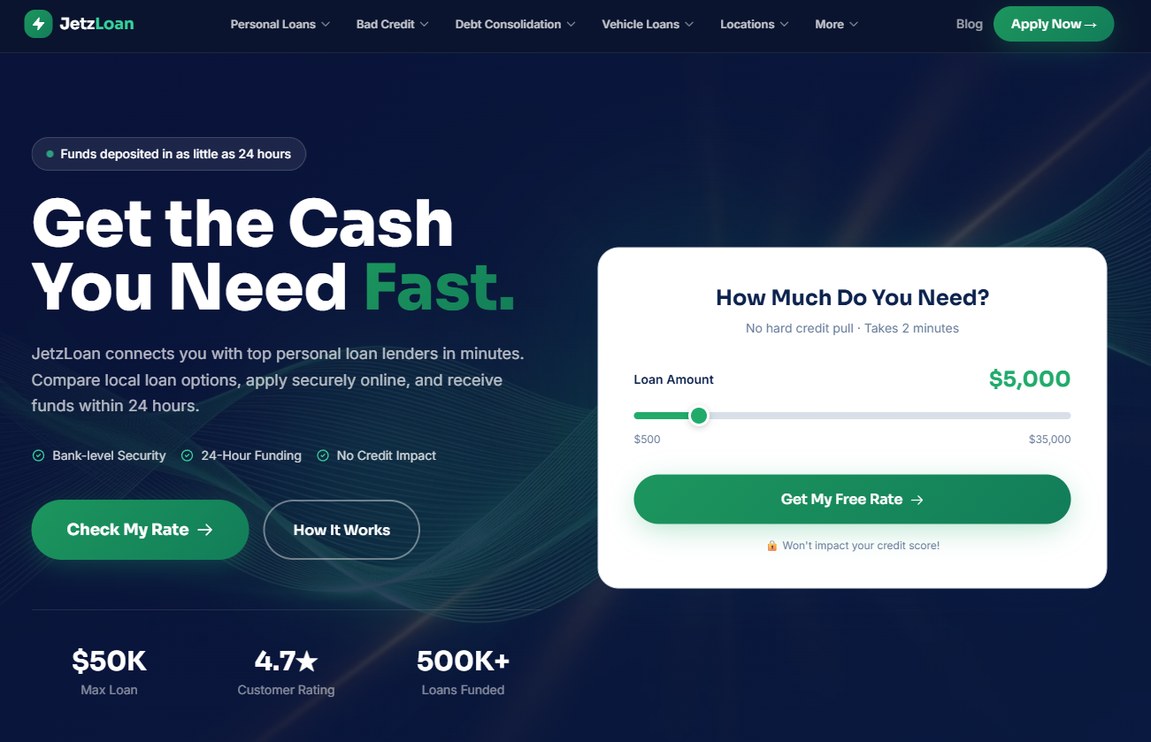
JetzLoan works like a high-speed bridge for people who need cash immediately. It is a great tool for anyone wanting to shop around without the sting of a hard credit inquiry. This approach lets you explore rates without hurting a fragile credit score. If you are facing a sudden financial crisis, you don’t want five different hard pulls on your report.
Too many inquiries can drop your score and disqualify you from better rates later on. With a maximum loan of $35,000, JetzLoan covers most big life expenses, like medical bills, car repairs, or wiping out high-interest credit card debt. Seeing a rate in just two minutes makes it a top choice when you are in a pinch. Their automated systems process data almost instantly.
Pros:
- Quick 24-hour funding.
- Checking rates does not impact credit scores.
- High customer rating of 4.7 stars.
Cons:
- Maximum loan amount is capped at $35,000.
2. OneMain Financial
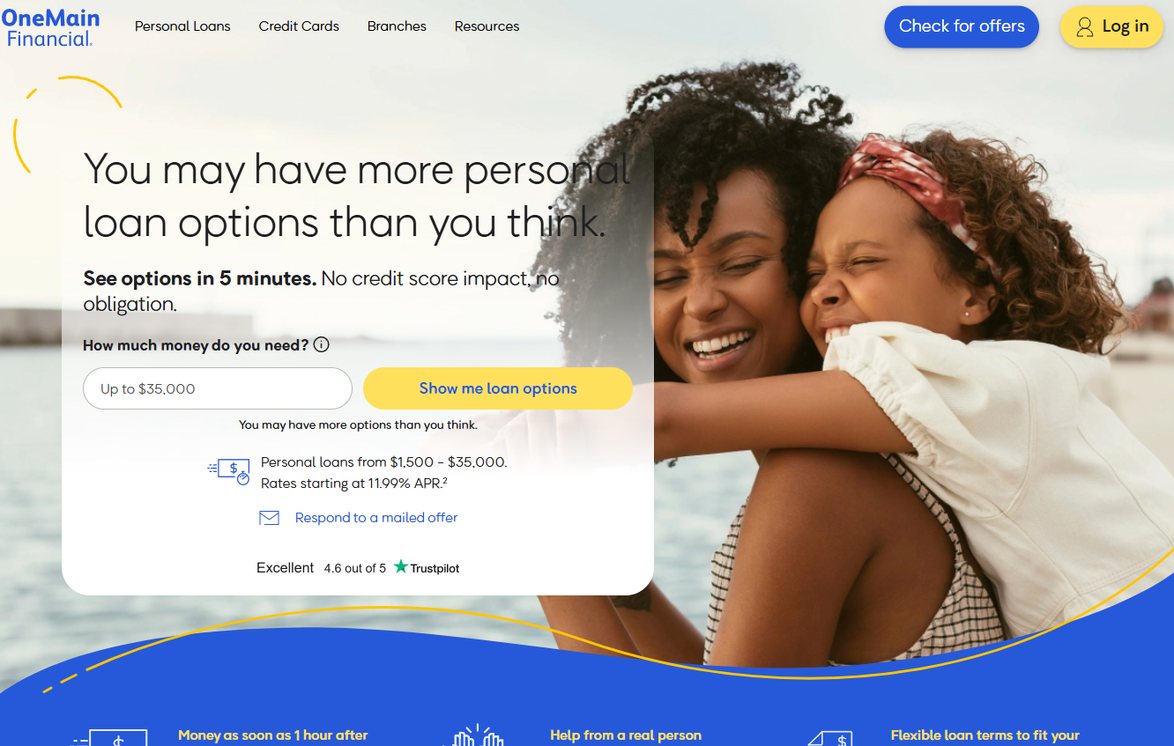
OneMain Financial is a major player that mixes digital convenience with the ability to talk to a real person. Sometimes, you just need to speak with a human being. This is vital for complex situations where a computer might say “no” even though a person might see your employment history or collateral as a “maybe.”
With over 1,300 branches, they have a physical presence that purely digital lenders lack. That local accountability provides a sense of security for many. They are a strong choice for those with less-than-perfect credit because they look at more than just a FICO score. They might consider your local branch relationship or other assets to find a way to say yes.
They offer flexible terms and can get money to you incredibly fast—sometimes within an hour of signing. If you want predictable monthly payments and don’t mind their specific interest rate structures, they are a very reliable option.
Pros:
- Extremely fast funding, potentially in one hour.
- Access to physical branch locations.
- Rates start at 11.99% APR.
Cons:
- Terms are limited to 60 months, not 12 years.
3. Capital One
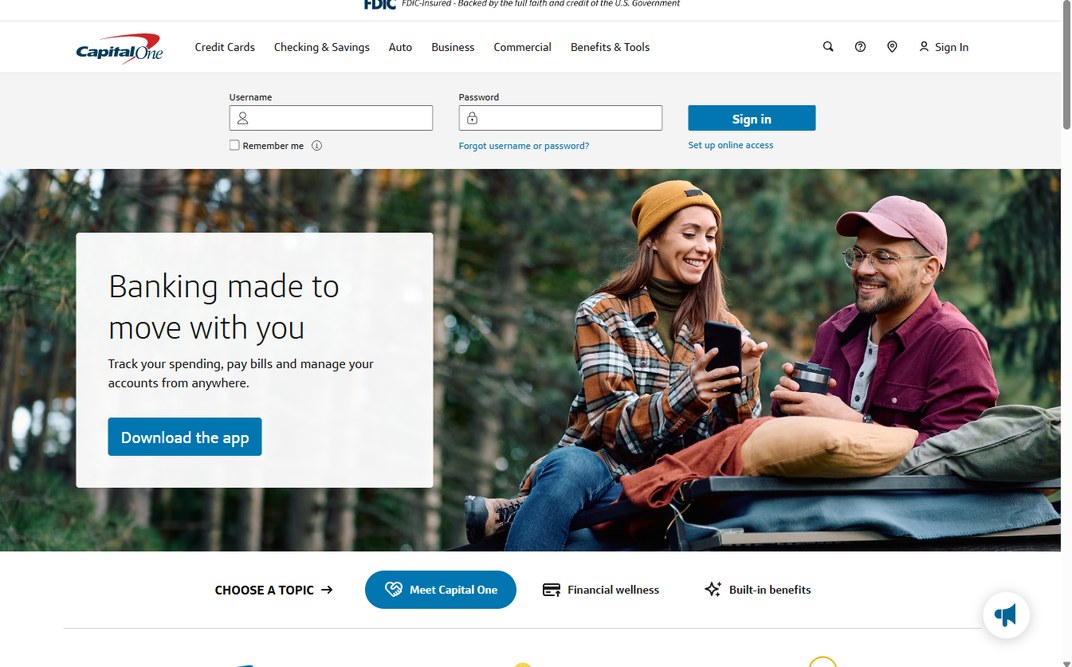
Capital One is a massive institution with a wide range of services. While many people know them for credit cards, their banking and lending tools are built to move with the user. They focus heavily on digital management and financial wellness. It is a very cohesive experience for the consumer.
If you use a Capital One loan to consolidate debt, you can often see your balances and your new loan terms in the same interface. This makes it much harder to lose track of what you owe. It keeps your financial life organized in one place, which is a huge plus for many borrowers.
The pre-qualification stage is incredibly smooth. You can check your eligibility in about 90 seconds without affecting your credit score. This is perfect if you are planning a big purchase months in advance. You can test the waters and see what your monthly payment would look like before you ever commit to the debt.
Pros:
- Highly integrated mobile app for management.
- Fast eligibility checks.
- Comprehensive financial tools and services.
Cons:
- Focus is heavily weighted toward credit cards and auto loans.
4. SoFi

SoFi has built a name for itself as a premier online lender, especially for people with strong credit profiles. They act more like a full-service financial hub than just a simple lender. Their platform is sleek and designed for people who want to manage their entire financial life in one spot.
For professionals, SoFi offers specialized products like student loan refinancing. This can be a massive part of a long-term plan to lower interest costs. Their platform is designed for efficiency and modern users who want everything to be digital and high-tech.
They also offer high-yield savings and investment tools. This means your loan and your savings can live under the same digital roof. You get a holistic view of your net worth, helping you see how loan payments affect your ability to save for retirement. Their user experience is widely considered among the best in the industry.
Pros:
- Comprehensive financial ecosystem.
- Strong reputation as a top online lender.
- User-friendly digital interface.
Cons:
- May have stricter requirements than specialized bad-credit lenders.
5. Splash Financial
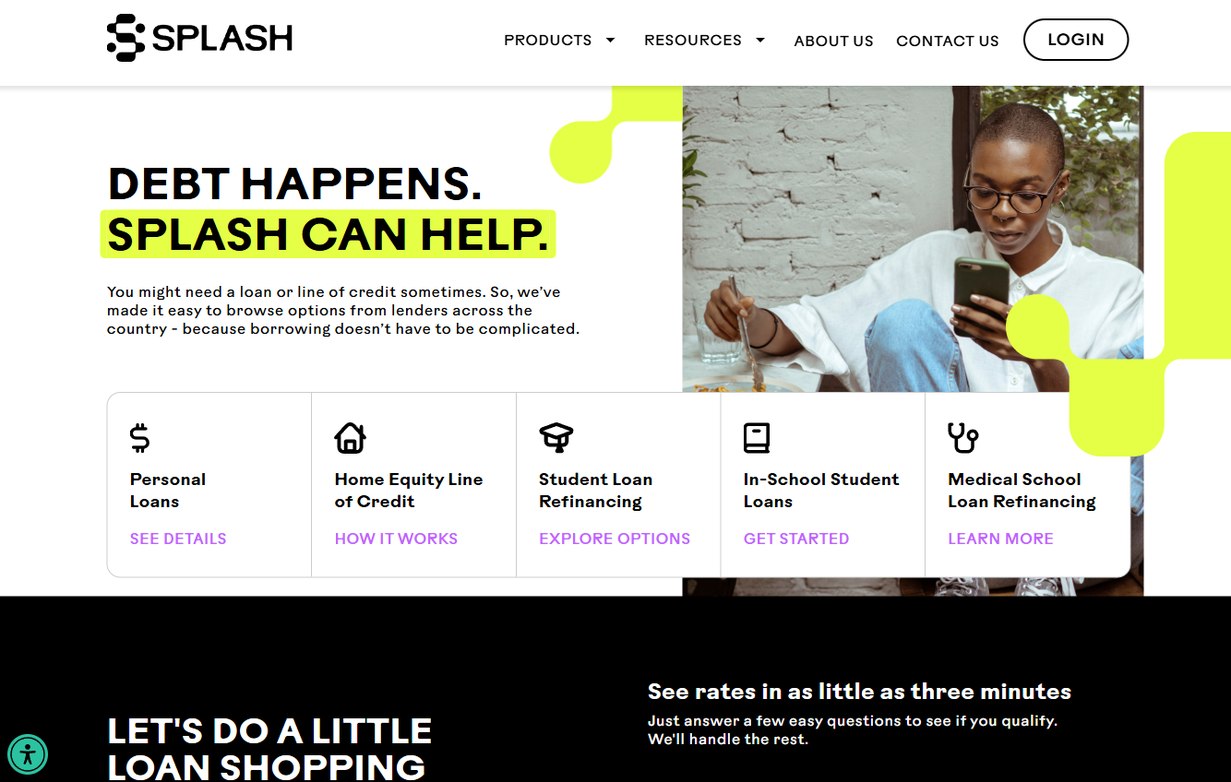
Splash Financial works as a marketplace. Rather than being a single lender, they connect you with a network of various lenders across the country. This is a huge advantage if you need a specific type of loan or a unique rate. It saves you from visiting twenty different websites one by one.
Splash does the heavy lifting by sending your info to multiple potential lenders at once. You can compare different offers in a single dashboard. This makes the whole search process feel much more organized and less overwhelming for the borrower.
The process is transparent. You can see rates in about three minutes by answering a few questions. This “browse and compare” model is great for freelancers or small business owners with non-standard income. One lender in the network might be much more understanding of your specific cash flow than another.
Pros:
- Access to a wide variety of lenders.
- Quick rate checking without credit impact.
- Transparent data privacy policies.
Cons:
- You are at the mercy of the third-party lenders in the network.
Understanding the Cost of Time: APR vs. Interest Rate
Many people make the mistake of only looking at the interest rate when comparing lenders. The interest rate is only one piece of the puzzle. To see the real cost of a long-term loan, you have to look at the Annual Percentage Rate (APR). This number includes the interest rate plus all the extra fees, like origination or processing fees.
Imagine Lender A offers 7% interest with a 3% fee, while Lender B offers 8% interest with no fees. Depending on how long the loan lasts, Lender B might actually be the cheaper option. It is a math problem that can save you a lot of money if you catch it early.
On a $10,000 loan over five years, a tiny difference in APR can turn into thousands of dollars in extra interest. This is even more true with extended terms because interest has more time to compound against you. Always ask for a “total cost of loan” disclosure. It tells you exactly how much you will have paid back by the final payment.
Maximizing Your Financial Position During a Loan
Taking out a long-term loan should be a strategic move, not a desperate one. You should treat the loan as a tool for building wealth or managing debt. If you use a loan to consolidate debt, use that lower rate to pay down the principal faster. Don’t just keep spending at the same rate on your old credit cards. If you do, you’ll end up with double the debt.
You should also watch your credit score while you pay the loan back. As you make on-time payments, your score will likely go up. Once it hits a higher tier, you might be able to refinance into a much lower interest rate. This “refinancing ladder” can save you a fortune over a decade.
Before you sign anything, check for “prepayment penalties.” You don’t want a lender charging you a fee just for being responsible and paying the loan off early. Look for lenders that let you make extra payments toward the principal whenever you want without any extra costs.
Keep an eye on your debt-to-income ratio. Even if you qualify for a loan, taking on too much can make it hard to get a mortgage later. Every dollar of borrowing capacity you use now is a dollar you can’t use for a home down payment later. Try to keep your total monthly debt under 36% of your gross income to stay safe.