

Top 6 Lenders for Bad Credit Loans in Virginia: 2026 Rankings
Last updated: 2026-11-10
Trying to manage money in Virginia can feel like driving through a thick fog when your credit score isn’t quite where you need it to be. You might find yourself scrambling for cash to cover a sudden HVAC failure during a Richmond summer or an unexpected medical bill after an accident on I-95. These moments are stressful, but they don’t have to ruin your financial future. Learning how lending works can turn a moment of panic into a calculated move toward stability.
Picking a lender is less about finding the fastest cash and more about finding a sustainable way forward. Your needs dictate the choice, whether that is a quick $500 for a new tire or a larger effort to consolidate multiple high-interest payments. You have to weigh the interest rates against the speed of funding so you aren’t just trading one problem for another. A high-interest payday loan might solve a Tuesday problem but create a Friday catastrophe. A slightly slower personal loan with a lower APR might be the smarter move for your long-term budget.
- Experian
- FastLendGo
- OneMain Financial
- Avant
- Upgrade
- Heritage Federal Credit Union
Evaluating Borrowing Options for Virginia Residents
To see which lenders actually matter in today’s market, we looked at several specific metrics. We checked how much money is actually available to someone with a less-than-perfect history and how quickly that cash hits a bank account. Speed matters, but it shouldn’t cost you transparency or lead to excessive fees. A lender that promises “instant” funds but hides a $50 origination fee in the fine print is not a true partner in your recovery.
We also looked at how easy these lenders are to reach. This includes applying online without a heavy impact on your credit score via “soft” credit pulls. Some lenders offer more personalized support through physical branches, which helps if you want to discuss complex consolidation strategies in person. Others operate entirely digitally, catering to the fast-paced lifestyle of Virginians who prefer to manage finances from a smartphone during a lunch break or a commute.
| Lender Name | Loan Amounts | Terms | Funding Speed | Credit Requirements |
|---|---|---|---|---|
| Experian | See site | See site | See site | FICO® Score 8 based |
| FastLendGo | $500 – $5,000+ | See site | Quick access | Bad/Fair Credit |
| OneMain Financial | $1,500 – $35,000 | 24-60 months | As soon as 1 hour | See site |
| Avant | See site | Installment loans | See site | See site |
| Upgrade | Up to $50,000 | Fixed rate | Fast funding | See site |
| Heritage Federal Credit Union | See site | See site | See site | See site |
1. Experian
Experian is a household name that focuses on credit monitoring and financial tools. For those in Virginia looking to understand their standing, they offer a way to see a FICO® Score 8 and access various credit protection services. They are the gatekeepers of the data that determines your borrowing power, providing the intelligence needed before you approach a traditional bank.
This option works best for someone who needs to understand the “why” behind their score before they dive into a loan. If your score dropped because of high credit card utilization, Experian’s tools can help you visualize how paying down specific balances might impact your eligibility for better rates later. Using tools to raise scores through utility or rent payments can potentially move you out of the bad credit category. It is a long-term strategy rather than a quick cash injection.
Pros:
- Access to FICO® Score 8 calculations.
- Tools to potentially raise scores via bill payments.
- Comprehensive credit and money management resources.
Cons:
- Not a direct lender for all personal loan products.
- Results for score increases may vary.
2. FastLendGo
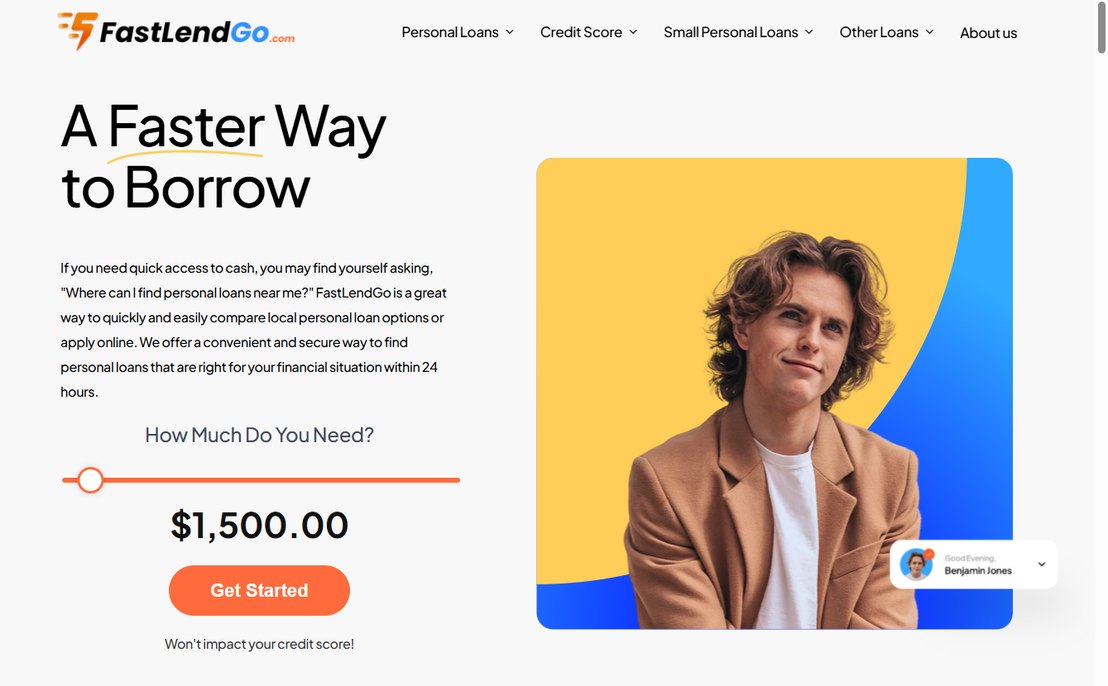
FastLendGo works for those who need cash for very specific, immediate needs. Whether it is a $500 emergency to fix a washing machine or a $5,000 request to cover tuition gaps, they specialize in various loan sizes. It is a streamlined way to compare options when you are staring at a mounting pile of bills and cannot afford a week-long underwriting process. (fastlendgo.com)
The service is useful for individuals who might not have a long credit history or those declined by major national banks due to recent fluctuations. They offer solutions for everything from auto repairs to dental financing. It is a versatile tool for someone who needs to bypass slow-moving banking bureaucracy to solve a pressing problem, providing a direct line to liquidity when standard options fail.
Pros:
- Wide variety of loan amounts from $500 up to $5,000+.
- Covers specific needs like auto or dental financing.
- Simple online application process.
Cons:
- Focus is heavily on smaller, short-term solutions.
- May be less suitable for massive debt restructuring.
3. OneMain Financial
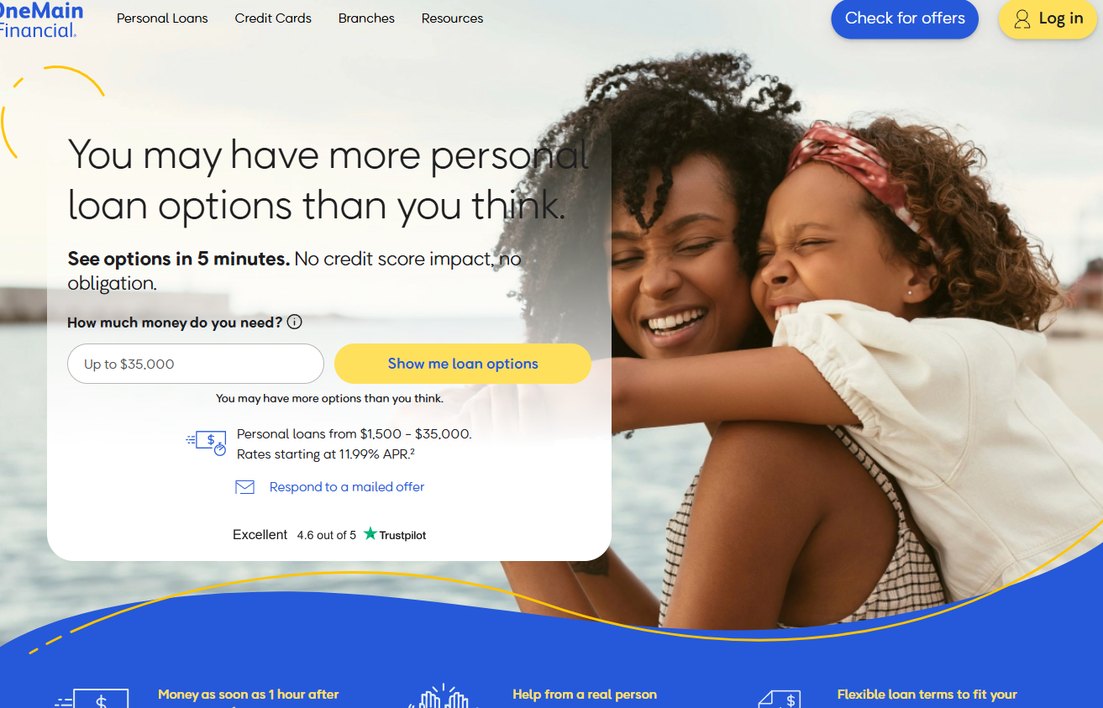
OneMain Financial is a heavyweight in the personal loan space, offering amounts up to $35,000. They are unique because they provide a human touch through over 1,300 physical branches. This is a massive advantage if you prefer looking someone in the eye rather than talking to a chatbot, especially if your financial situation is complex and requires a nuanced discussion about repayment terms.
They offer fixed monthly payments and terms ranging from 24 to 60 months. This makes them a strong contender for someone looking to consolidate debt—for example, taking one large loan to pay off four different high-interest credit cards—or to manage a large purchase like a home renovation. Their ability to fund money as soon as one hour after signing is a game-changer for emergencies that require immediate capital.
Pros:
- High loan limits up to $35,000.
- Physical branch locations for personalized support.
- Extremely fast funding after signing.
Cons:
- Interest rates start at 11.99% APR.
- Requires a formal signing process for funding.
4. Avant
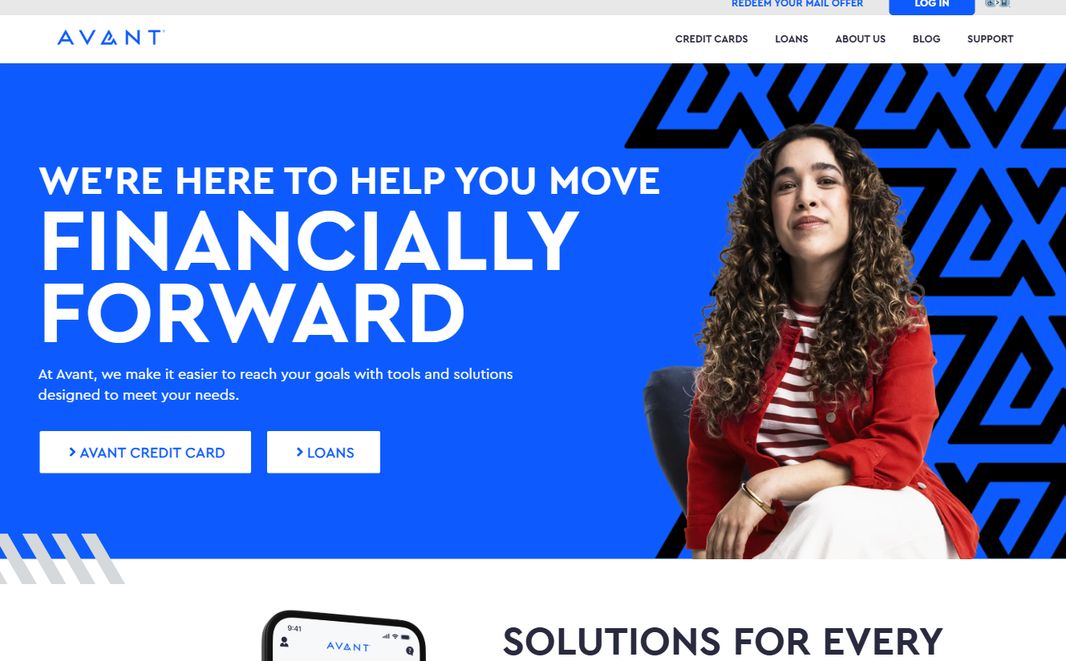
Avant positions itself for those looking to move financially forward. They offer a suite of tools including credit cards and installment loans. It is designed for the person looking for a clear path through the complexity of modern debt management, moving away from the “survival mode” of quick loans and into a “growth mode” of structured credit.
They focus on providing solutions for every step of your journey, from home improvement to unexpected emergencies. Their approach is less about a single transaction and more about providing the tools to help you reach long-term goals, such as rebuilding a credit profile damaged by past setbacks. It is a way to approach credit management by integrating different financial products into a single strategy.
Pros:
- Offers both credit cards and installment loans.
- Focuses on long-term financial movement.
- Provides tools to help manage unexpected costs.
Cons:
- May have stricter requirements than specialized bad credit lenders.
- Less emphasis on extremely low-dollar emergency cash.
5. Upgrade
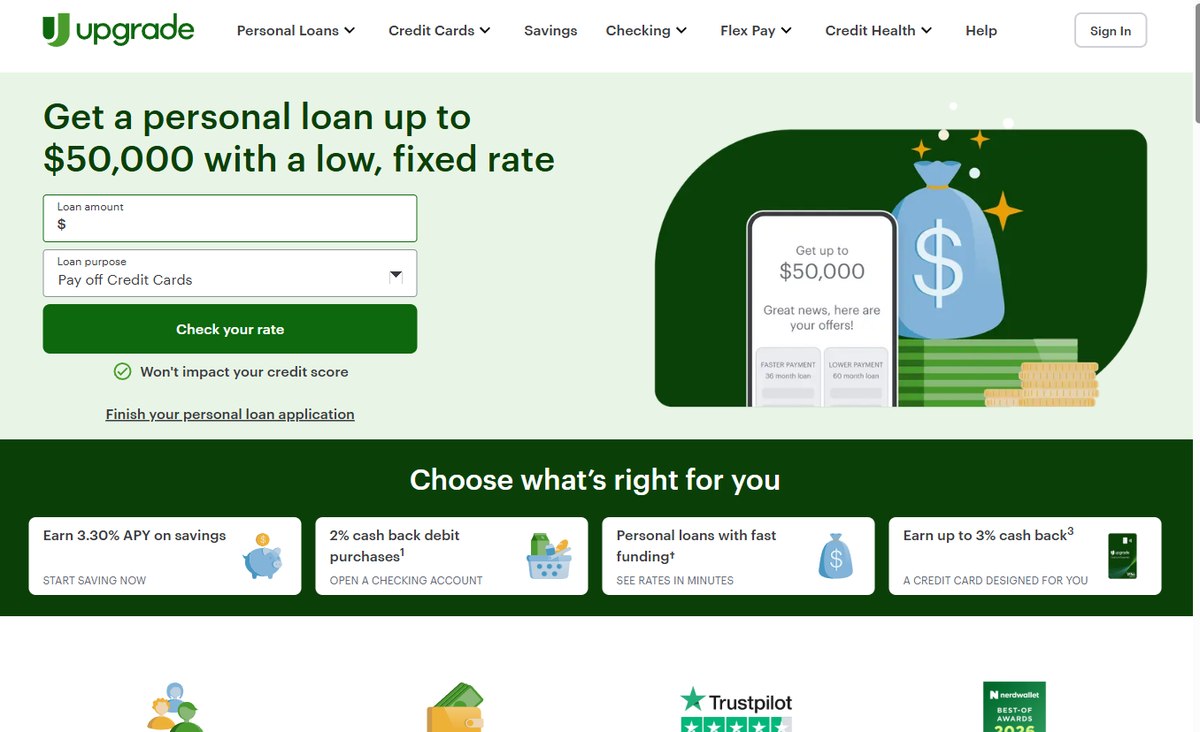
Upgrade is a high-tech option for those who want speed and a digital-first experience. They offer personal loans up to $50,000 with fixed rates. It is an ideal choice for someone comfortable managing their entire financial life through a smartphone or computer and values a frictionless, app-based experience over physical branch visits.
They provide a variety of options including checking accounts with cash back and rewards. For someone looking to streamline finances—perhaps by consolidating a high-interest student loan or a medical bill into one manageable monthly payment—Upgrade offers a one-stop-shop feel. Their ability to show rates in minutes without impacting your credit score makes the initial exploration very low-risk, allowing you to shop around without fear of a “hard pull.”
Pros:
- Large loan amounts up to $50,000.
- Quick rate checking with no credit score impact.
- Offers integrated checking accounts with rewards.
Cons:
- High reliance on digital interaction.
- Complexity of multiple products may be overwhelming.
6. Heritage Federal Credit Union
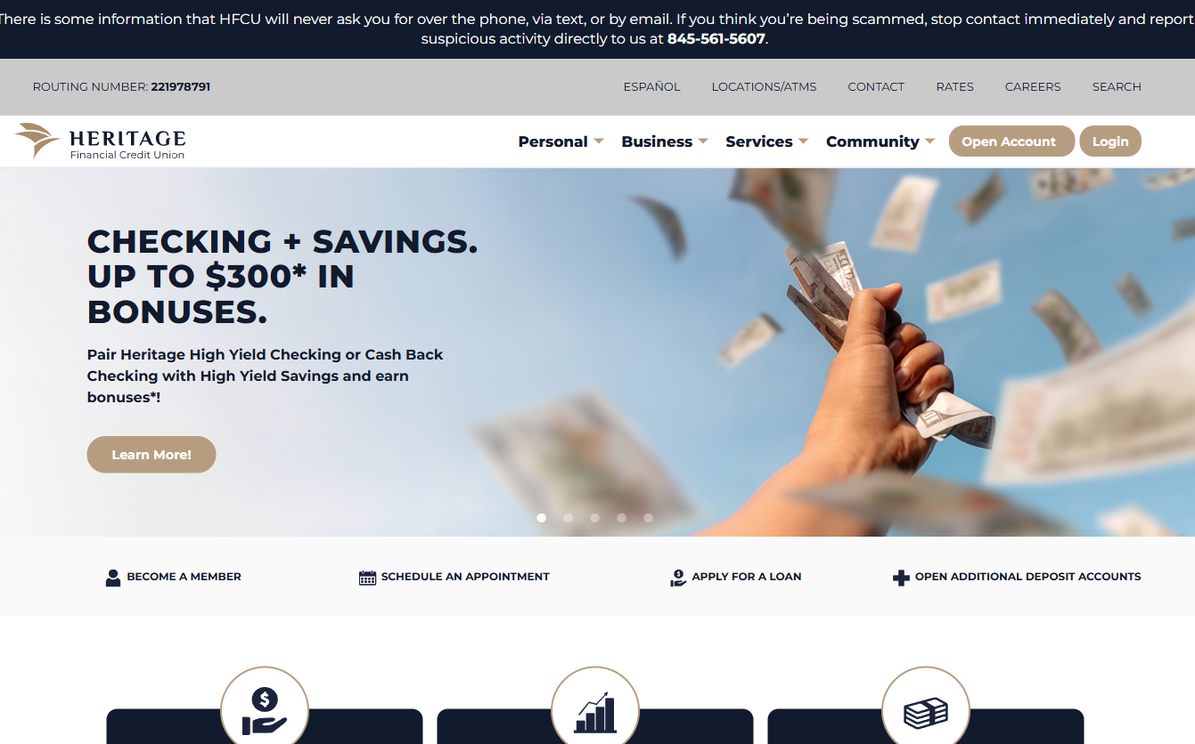
Heritage Federal Credit Union offers the community-focused stability that many people crave. As a credit union, they often provide a different atmosphere than big national banks; they are member-owned, meaning their primary goal is serving their community rather than maximizing shareholder dividends. They offer high-yield savings and certificates that can help you build wealth while you manage debt.
They are a great fit for someone who wants to grow their money through certificates with rates around 4.30% to 4.40% APY. It is a more traditional banking experience that prioritizes security, local presence, and community membership. While they are less about “quick cash” and more about long-term stability, their products are essential for anyone looking to transition from borrowing to saving.
Pros:
- Community-oriented service and stability.
- Competitive APY on certificates and savings.
- Offers various personal and business services.
Cons:
- May have more stringent membership requirements.
- Typically slower than specialized online lenders.
Understanding the Difference Between Secured and Unsecured Loans
When exploring these lenders, you will encounter two primary types of loans: secured and unsecured. This distinction is vital because it determines what is at stake if you face financial hardship. An unsecured loan, such as most personal loans offered by Avant or Upgrade, does not require collateral. This means you aren’t putting your car or home on the line to get the funds, but the interest rates are typically higher to compensate the lender for the increased risk.
A secured loan, on the other hand, requires an asset—like a vehicle title or a savings account—to back the debt. If you cannot repay the loan, the lender has a legal right to seize that asset. While secured loans often come with lower interest rates and higher borrowing limits, they carry a much higher risk to your personal property. In Virginia, understanding this difference is crucial before signing a contract that could jeopardize your primary mode of transportation or your home equity.
How to Prepare Your Financial Documents for a Faster Approval
To maximize your chances of a quick approval and to prevent delays in funding, you should have your paperwork ready before you even begin the application process. Lenders need to verify your identity and your ability to repay the debt. Having these documents scanned and ready can reduce your application time from hours to minutes.
The following checklist is essential for most personal loan applications:
- Proof of Identity: A valid Virginia driver’s license or state-issued ID card.
- Proof of Income: Your two most recent pay stubs, W-2 forms, or, if you are self-employed, your most recent tax returns.
- Proof of Residency: A recent utility bill (water, electric, or gas) or a lease agreement to verify your Virginia address.
- Bank Account Information: Your routing and account numbers for the account where you want the funds deposited.
- Employment Verification: The contact information for your current employer or a recent professional reference.
By having these ready, you avoid the “back-and-forth” that often plagues the underwriting process, allowing lenders like OneMain Financial or FastLendGo to move from the application stage to the funding stage much more efficiently.
Avoiding Common Financial Pitfalls
When you are in a rush to find a loan, it is easy to overlook the fine print. Always check for hidden fees that can turn a small loan into a massive debt burden. For instance, some lenders charge “origination fees” that are deducted from your loan amount before you ever see the cash, meaning a $1,000 loan might only put $950 in your pocket, even though you owe interest on the full $1,000. It is vital to understand the total cost of borrowing, including the APR, before you sign anything.
Avoid the temptation to take out a new loan to pay off an old one unless the interest rate is significantly lower. This is known as “churning” debt, and while it can be a legitimate consolidation strategy if the math works, it can also create a cycle of debt that is incredibly difficult to break if you continue to use the credit cards you just cleared. Instead, use loans as a tool for consolidation or for essential expenses that will ultimately save you money, such as fixing a car that is necessary for you to get to work.
Lastly, never provide personal information to anyone who contacts you out of the blue via text or email. Scammers often target people looking for quick financial relief by posing as well-known lenders or government agencies. They may claim you are “pre-approved” for a loan that doesn’t exist, only to ask for an “upfront fee” to release the funds. This is a classic scam. Only deal with reputable lenders through their official, secure websites or verified physical branches.