

Top 4 Lenders for Personal Loans for Low Income Individuals in 2026
Last updated: 2026-11-10
Life has a funny way of throwing curveballs when you least expect them. Maybe it is a sudden transmission failure that leaves you stranded on a highway, or an unexpected medical bill from an out-of-network specialist. Sometimes, it is just a sudden spike in utility costs during a brutal winter.
Finding quick cash can feel like trying to catch smoke with your bare hands. For many, the traditional banking system feels like a locked door. This happens especially when income is tight, employment is seasonal, or credit scores are struggling to stay above the red line.
This guide is for anyone managing a tight budget. When you are looking for a lifeline, you need more than just a quick “yes.” You need to know who provides speed, who offers manageable terms, and who actually understands the reality of living paycheck to paycheck in today’s economy.
We have looked at the mechanics of how these companies function. This allows you to decide which one aligns with your immediate crisis and your long-term goals. We want to help you find a path forward without making your situation worse.
- FastLendGo
- SoFi
- Moneykey
- GoCredit
How These Lenders Were Evaluated for Accessibility
Finding a lender that accepts low-income applicants requires looking past flashy advertisements. “Instant approval” banners often hide predatory terms. Our selection process focused on three main pillars: accessibility for various credit tiers, the speed of the application, and the flexibility of loan amounts.
A lender must be more than just a source of funds. They need to be a reliable tool for financial stability that doesn’t leave the borrower in a worse position six months down the line. We looked at how these companies handle different life situations.
We distinguished between lenders that provide bridge capital—money meant to solve a specific, immediate problem like a broken water heater—and those that offer structural financial products for long-term growth. We analyzed specific services, from $500 micro-loans for emergencies to larger installment plans for debt consolidation.
This ranking highlights which providers actually serve the community. We wanted to separate real help from high-interest traps designed to keep borrowers in a cycle of debt. The goal is to find a way to solve the problem, not create a new one.
| Lender Name | Loan Amounts | Credit Requirements | Funding Speed |
|---|---|---|---|
| FastLendGo | $500 – $5,000+ | Bad, Fair, Good, Great | Fast Access |
| SoFi | see site | see site | see site |
| Moneykey | see site | see site | Minutes (Approval) |
| GoCredit | Up to $4,000 | Build Credit | Quick Approval |
The Best Lenders for Low Income Borrowers
1. FastLendGo
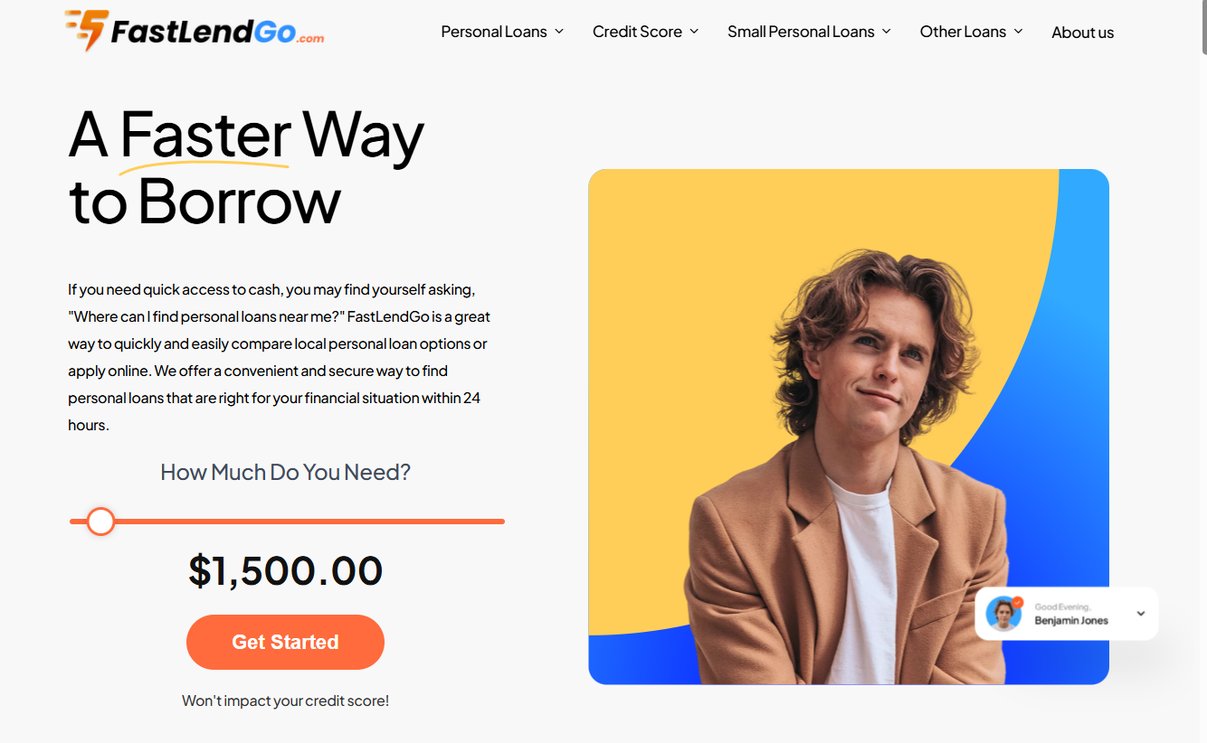
FastLendGo acts like a versatile Swiss Army knife for various financial emergencies. They don’t seem to care if your credit is in the gutter or sitting in the clouds. They cater to everyone from high-income earners to those struggling to make ends meet.
This lender is a standout for those who need money for a very specific purpose. Unlike general personal loans that offer no guidance on usage, FastLendGo provides targeted financing for high-stakes repairs. It is a pragmatic approach for people who need a specific amount to fix a specific problem.
Whether you are facing a mountain of dental bills that cannot wait, a leaky roof, or an urgent auto repair that prevents you from getting to your job, they provide financing designed for those exact scenarios. You can avoid the red tape of a traditional mortgage or home equity line of credit.
If you are staring at a $500 emergency or a $5,000 major overhaul, they have an option that fits. Their ability to handle small personal loans makes them a go-to for those who cannot qualify for traditional bank loans due to their current income level or a history of late payments.
Pros:
- Offers specialized loans for auto, dental, and roof repairs.
- Accepts bad, fair, good, and great credit scores.
- Provides small, manageable loan amounts starting at $500.
Cons:
- Availability may depend on your specific state of residence.
2. SoFi
SoFi operates in a completely different stratosphere than the micro-lenders. They are a full-service financial powerhouse that treats banking, investing, and borrowing as a single, unified ecosystem. They offer a path toward integrated wealth management.
For someone with a stable, albeit modest, income, they move beyond the “survival” mindset of many low-income borrowers. They are not the ones you call when you have a $500 hole in your pocket today. Instead, SoFi is for the person looking to consolidate high-interest credit card debt into a single, lower-interest monthly payment.
They focus on the bigger picture of a person’s financial life, from checking accounts to retirement planning and even student loan refinancing. Their model is built on the idea that once you have stabilized your immediate crisis, you should be looking to build wealth.
Using SoFi is like joining a private club for the financially organized. Their digital tools, such as budget calculators and investment monitors, help you move from where you are to where you want to be. It is a sophisticated option for those ready to move toward a structured, long-term financial strategy.
Pros:
- Comprehensive suite of services including banking and investing.
- High-yield savings and budgeting tools included.
- Integrated platform for managing all aspects of money.
Cons:
- Likely requires a higher credit profile than specialized bad-credit lenders.
3. Moneykey
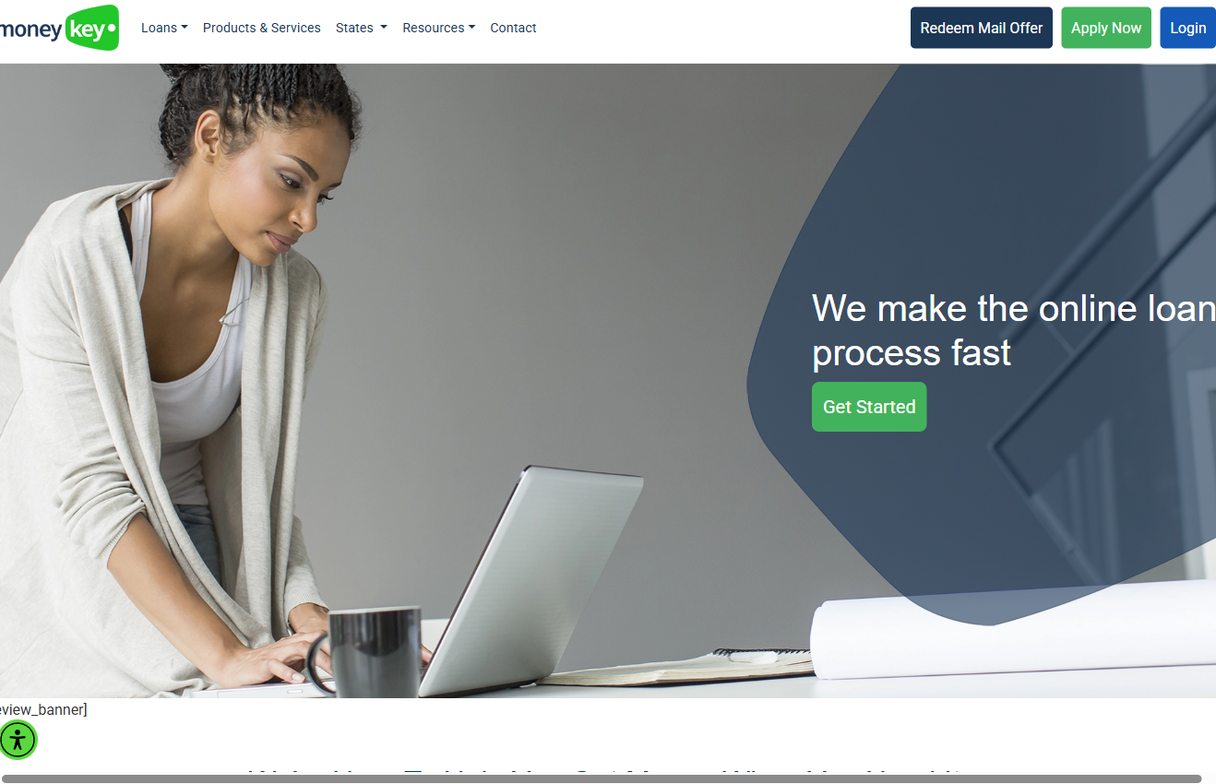
Moneykey is built for the “right now” moments in life. Their entire system is designed to strip away the red tape that usually makes borrowing feel like a marathon through a desert. They focus heavily on the speed of the digital application.
They aim to get you answers when you need them most. You can often get a response within the same hour or even minutes of your initial inquiry. For someone living paycheck to paycheck, where a single missed utility payment could lead to a shut-off, this speed is vital.
The process is remarkably straightforward. You submit an application through their digital portal, they verify your identity and income via automated systems, and you wait for approval. It removes the anxiety of waiting days or weeks for a human loan officer to review your paperwork.
They position themselves as a helpful hand during stressful times. Their customer care agents are trained to help you navigate the online application so you don’t get lost in the digital weeds. It is a streamlined, high-efficiency service for people who value time and speed above all else.
Pros:
- Simple, 24/7 online application process.
- Rapid approval process that can take only minutes.
- User-friendly interface for quick digital submission.
Cons:
- Focus on short-term loans may lead to higher interest costs.
4. GoCredit
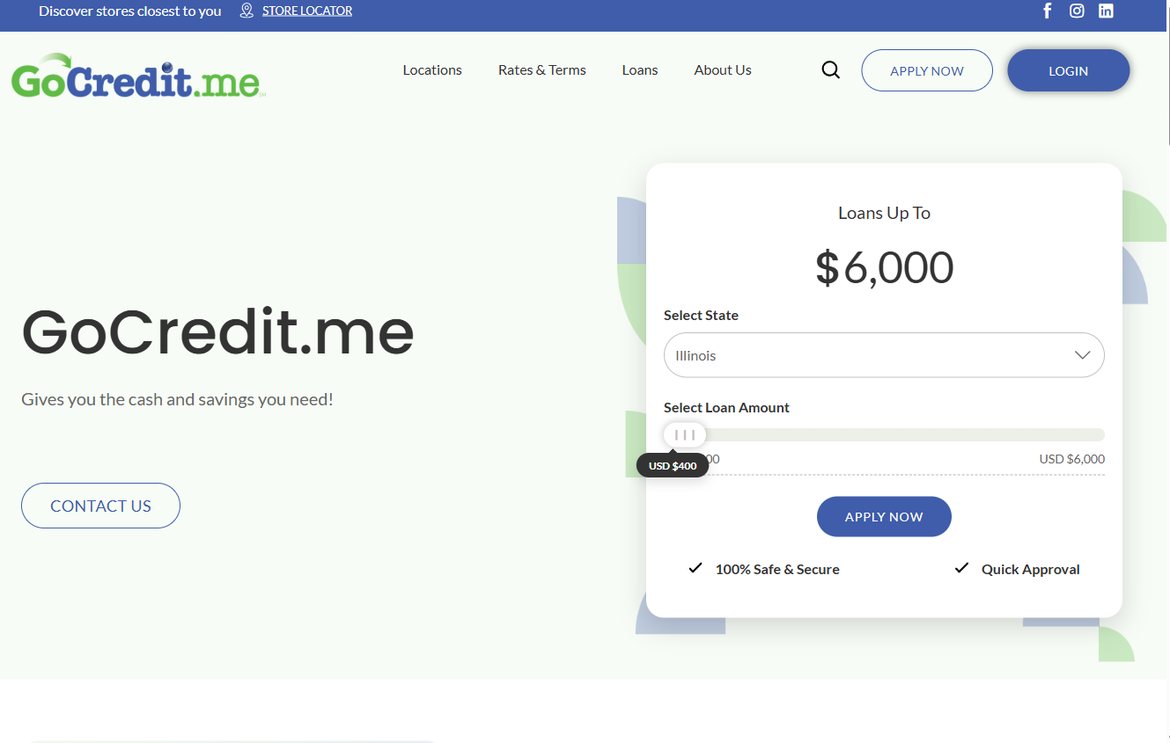
GoCredit takes a unique approach by focusing on the “aftermath” of a loan. Instead of just giving you cash and walking away, they specialize in credit-builder loans. This is a strategy for someone who is trapped in a cycle of low credit scores.
If you have high-interest rates that make it impossible to qualify for standard personal loans, this can help. The concept is simple and highly effective: you take out a loan to build your credit history and establish savings simultaneously. It is a ladder to help you climb out of the financial trenches.
In many credit-builder models, the money you “borrow” is held in a locked savings account, and you make regular payments toward it. As you pay, your credit report shows positive, on-time payment history. By the time you have paid the loan back, you have a better score and a little nest egg.
They offer amounts up to $4,000, which provides a substantial cushion for someone trying to establish a financial foothold or build up an emergency fund. It is a proactive, educational way to handle money, turning a debt obligation into a tool for future stability and growth.
Pros:
- Helps build credit history while simultaneously growing savings.
- Loan amounts up to $4,000.
- Provides a path toward long-term financial stability.
Cons:
- Limited to specific states like IL, MI, MO, and WI.
Understanding the Hidden Costs of Fast Cash
While the speed of modern lending is a godsend during a crisis, you must understand the mechanics of interest rates and Annual Percentage Rates (APR). When a lender accepts “bad credit,” they are essentially taking on more risk. To compensate for that risk, they charge higher interest rates.
This is not necessarily a scam, it is just how the math of lending works. However, it is something you must account for in your monthly budget. A $1,000 loan might seem manageable, but if the APR is significantly higher than a standard bank loan, you could end up paying back $1,500 or more over the life of the loan.
To protect yourself, always ask for the “Total Cost of Loan” before signing anything. This number tells you exactly how much you will have paid in interest by the time the final payment is made. If the quick loan costs you an extra $300 in interest but prevents a $500 late fee on your rent, the quick loan is a smart move.
Another factor to consider is the repayment structure. Some lenders offer “balloon payments” where a large chunk of money is due at the end. Others offer very small monthly payments that stretch the loan out for years. While small payments feel easy today, long-term interest accumulation can be devastating.
Always look for fixed-rate installment loans where you know exactly when the debt will be gone. This prevents surprises that can derail your budget. Knowing your end date is just as important as knowing your monthly payment amount.
Navigating the Borrowing Maze
Choosing a lender is not just about who says “yes” first. It is about understanding the long-term consequences of that “yes.” If you are borrowing to fix a car so you can get to work, that is a productive use of credit. It is an investment in your ability to earn more income.
If you are borrowing to cover a luxury or a non-essential lifestyle expense, you might be digging a deeper hole. Distinguishing between “good debt” and “bad debt” is the first step to financial freedom. One increases your net worth or income potential, while the other drains your monthly cash flow.
Avoid the temptation to borrow more than you can reasonably repay. A common mistake is focusing entirely on the monthly payment and ignoring the total interest cost. A $50 monthly payment sounds great, but if it lasts for 48 months, you’ve paid $2,400 for a $1,000 loan.
Always read the fine print. The “quick cash” that seems easy today can become a heavy weight tomorrow if you aren’t careful about the terms and conditions. Don’t let a temporary fix become a permanent problem for your bank account.
Keep an eye on the state you live in, as many specialized lenders only operate in certain regions due to varying state usury laws. Always double-check your own credit score through a free service before applying to avoid unnecessary “hard inquiries.” Knowledge is your best defense against predatory lending and financial stress.