

Top 5 Lenders for a Personal Loan with a Co-Signer in 2026
Last updated: 2026-11-10
Trying to find a lender when your credit score is struggling feels like wandering through a thick fog. Many people turn to a co-signer to bridge the gap between their current bank balance and the strict requirements of a traditional bank. It acts as a lifeline, opening doors that automated credit algorithms usually slam shut.
Consider a borrower with a 580 FICO score. They might find it impossible to secure a personal loan for a necessary medical procedure on their own. However, adding a co-signer with a 740 score can transform that application from a guaranteed rejection into a high-probability approval.
When looking at these options, accessibility and speed are the most important factors. You aren’t just searching for a pile of cash. You want a partner that understands how credit rebuilding works. Whether you are tackling a sudden medical bill, an unexpected car repair, or a home improvement project, the terms of the loan matter as much as the approval itself.
A lender that offers a lower interest rate but takes three weeks to fund a loan is of little use if your car is currently sitting in a mechanic’s shop. If you need to get to work, you need the money now, not in twenty days.
- FastLendGo
- Experian
- LoanStart
- BMG Money
- LPI Loans
Evaluating the Best Borrowing Options for Co-Signers
Our ranking process focused on how easily a borrower can move through the application. We looked at lenders that cater to various credit tiers, from those with stellar scores to those struggling to make ends meet. A co-signer’s job is to bolster the application, but the lender’s infrastructure must be ready to receive them.
If a lender uses a rigid, automated system that only accepts applicants with a 650+ score, a co-signer might not even matter. The system will flag the primary borrower and terminate the process immediately. In those cases, the extra credit score doesn’t provide any real advantage.
Speed of funding and flexibility in loan amounts were also heavy hitters in our assessment. Some lenders offer instant transfers via ACH, which can land in your bank account within one to three business days. Others focus on specialized niches like retirees or high-income individuals who might require larger, more complex loan structures.
We prioritized clarity so that a borrower knows exactly what they are walking into before they ever sign a single piece of paper. We also looked at the transparency of fee structures, specifically checking for prepayment penalties that could make an early payoff more expensive.
| Lender Name | Loan Amounts | Terms | Credit Requirements |
|---|---|---|---|
| FastLendGo | $500 – $5,000+ | see site | Bad to Great Credit |
| Experian | see site | see site | Prequalify for Bad Credit |
| LoanStart | Up to $40,000 | see site | see site |
| BMG Money | $500 – $12,000 | 6 – 48 months | Any Credit Score |
| LPI Loans | see site | see site | Imperfect Credit |
The Top-Rated Lenders for Co-Signed Personal Loans
1. FastLendGo
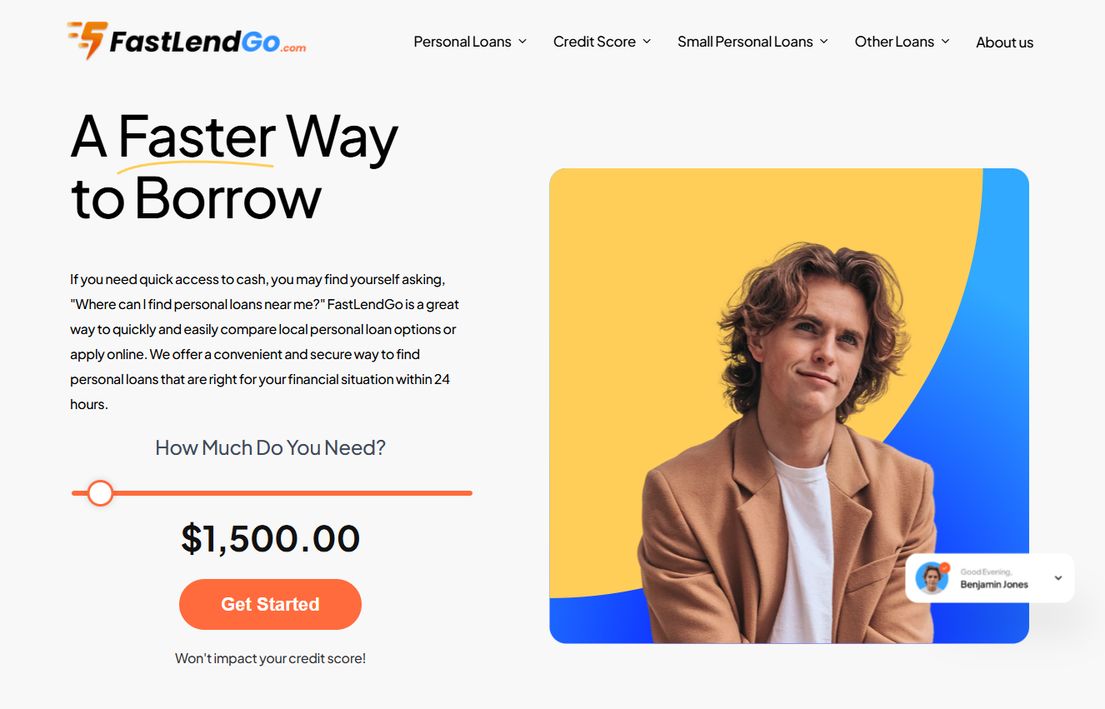
FastLendGo works well for those trying to manage the choppy waters of personal finance. They offer a wide variety of specific loan types, ranging from small $500 emergency funds to larger amounts for high-income individuals. This segmented approach ensures you find a product that fits your specific life situation.
If you need exactly $1,200 for a transmission repair, you aren’t forced into a $5,000 loan that carries unnecessary interest on the remaining $3,800. (fastlendgo.com). This precision helps keep your debt manageable from the very start.
This lender is particularly well-suited for those who need quick access to cash for urgent matters like dental work or roof repairs. Because they cover several states and various credit tiers, they provide a broad safety net for those who might otherwise be ignored by big-box banks. Their ability to handle specialized purposes makes them a standout for niche needs where the loan’s intent is clearly defined.
Pros:
- Wide range of specific loan purposes like auto or dental.
- Options for various credit levels from bad to great.
- Covers multiple states across the US.
Cons:
- Niche focus might limit options for general large-scale financing.
2. Experian
Experian is a giant in the financial world, and their loan matching services reflect that scale. They provide a way to see what you might qualify for without the immediate sting of a hard credit inquiry. This “soft pull” mechanism allows borrowers to shop around with a sense of security.
You can explore multiple lenders without seeing a drop in your credit score during the comparison phase. They are an excellent choice for someone who wants to understand their financial health while simultaneously looking for liquidity. It is a way to scout the landscape without any permanent damage to your rating.
By offering tools to raise credit scores through utility and rent payments, they provide a path toward long-term financial stability rather than just a quick fix. This approach is vital for those using a co-signer; if the primary borrower uses these tools to improve their score during the loan term, they may eventually be able to refinance into a much lower interest rate on their own.
Pros:
- Ability to prequalify without impacting credit scores.
- Tools to help boost credit scores through regular bills.
- Strong focus on credit protection and monitoring.
Cons:
- The focus is more on credit monitoring than direct, specialized lending.
3. LoanStart
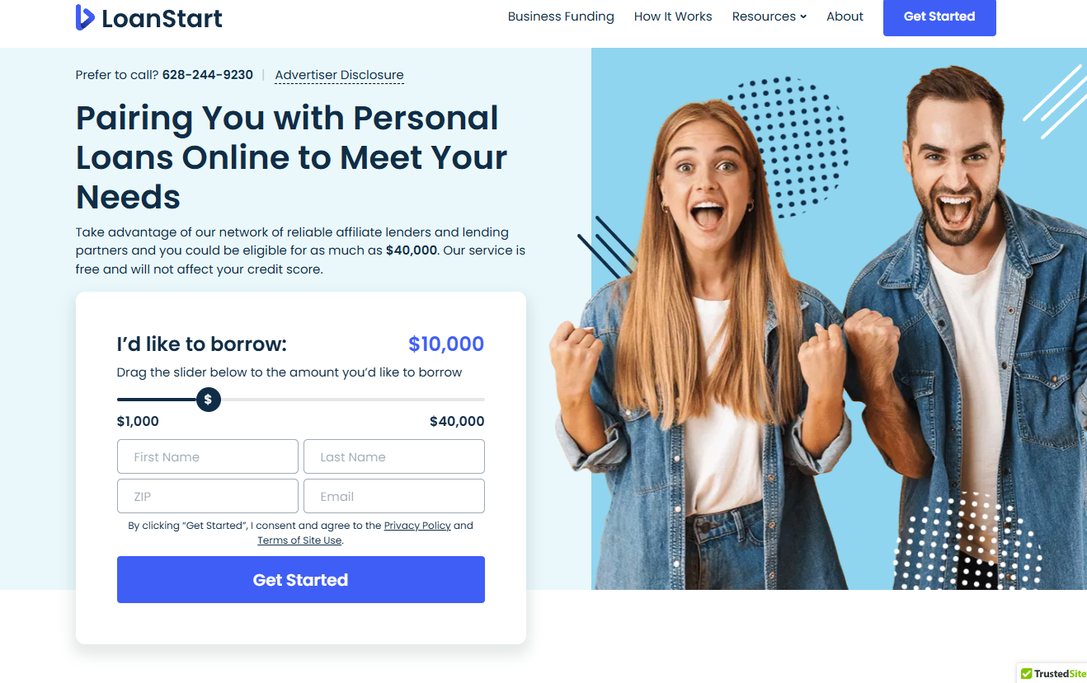
LoanStart functions as a sophisticated matchmaker within the lending ecosystem. Instead of being a single lender, they connect you with a network of reliable affiliate partners to find the best fit. This can be a massive advantage when you are looking for a larger sum of money.
If you are trying to consolidate $25,000 in high-interest credit card debt, a single lender might find that risk too high. However, LoanStart’s network might include a specialized debt consolidation lender that sees the value in your situation. They act as a bridge to a wider pool of possibilities.
If you are looking to borrow upwards of $40,000, this service is designed to take the heavy lifting out of the search. It is an ideal solution for those who have been rejected by traditional banks and need a more expansive search. By casting a wider net, they increase the likelihood of finding a lender that accepts a co-signer to mitigate the perceived risk.
Pros:
- Access to a large network of affiliate lenders.
- Potential for high loan amounts up to $40,000.
- Free service that does not affect your credit score.
Cons:
- As a matchmaker, you are dependent on the third-party lenders’ terms.
4. BMG Money
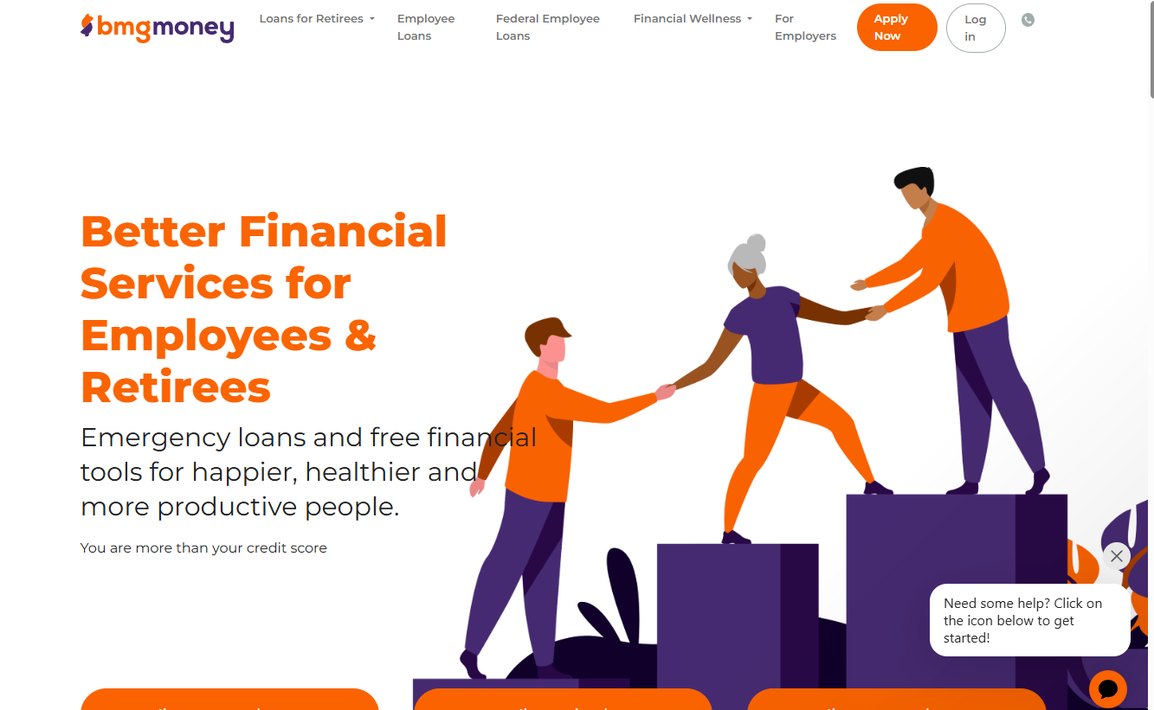
BMG Money carves out a unique space by focusing specifically on employees and retirees. They understand that traditional credit scores don’t tell the whole story of a person’s reliability. For those with steady employment or a pension, this lender offers a way to access funds based on more than just a number.
They look at the stability of your income stream, which is often a more accurate predictor of repayment ability than a fluctuating credit score. Their application process is designed for speed, offering loan offers in minutes from almost any device. This is helpful for someone needing immediate financial wellness solutions.
A retiree who needs a quick infusion of cash for a home repair can get an answer almost instantly. This provides peace of mind during stressful times when you simply cannot wait for a week of manual reviews. It is about getting the money when the need actually arises.
Pros:
- Specialized products for retirees and employees.
- Fast application with results in minutes.
- Instant funding available for many borrowers.
Cons:
- Interest rates can be relatively high, ranging from 19.99% to 35.99%.
5. LPI Loans

LPI Loans is a dedicated choice for those who feel they have been left behind by the traditional banking system. They focus on “imperfect credit,” helping people rebuild their financial standing through manageable installment loans. They offer a more personal touch than a faceless online entity.
This personal touch can be invaluable when negotiating terms or explaining a specific hardship that a computer algorithm would simply ignore. They handle the smaller amounts that big banks often find too insignificant to bother with. It is a localized approach to debt management.
By setting up automatic payments, they help borrowers establish a consistent history of on-time payments, which is the bedrock of a healthy credit score. This creates a cycle where the loan helps fix the credit, and the improved credit allows for better financial options in the future.
Pros:
- Focuses on credit rebuilding for those with imperfect credit.
- Handles smaller loans that banks often reject.
- Flexible installment payment structures.
Cons:
- More localized presence may limit availability depending on your location.
The Step-by-Step Process of Adding a Co-Signer
Adding a co-signer is not as simple as just adding their name to a piece of paper. To ensure the application is successful, you should follow a structured approach to maximize your chances of approval and minimize friction with the lender.
- Review the Co-Signer’s Credit Profile: Before applying, ask your potential co-signer to check their credit report. A co-signer with a “fair” score might not provide the necessary boost; you ideally want someone with “good” to “excellent” credit to truly impact the lender’s risk assessment.
- Gather Documentation Upfront: Most lenders will require proof of income (W-2s or recent pay stubs) and identification for both the primary borrower and the co-signer. Having these scanned and ready can prevent delays in the funding phase.
- Compare Total Cost of Ownership: When the lender provides a quote, don’t just look at the monthly payment. Calculate the total interest paid over the life of the loan. A co-signer might allow you to get the loan, but if the lender charges a higher rate because of your credit tier, you must ensure the co-signer’s presence actually lowers the APR.
- Establish a Repayment Agreement: Even though the bank sees you and the co-signer as one entity, you should have a private agreement with the co-signer. This should outline exactly when payments will be made and what happens if a payment is missed, ensuring the relationship remains intact.
Common Pitfalls to Avoid When Using a Co-Signer
While a co-signer can be a powerful tool, many borrowers fall into traps that can lead to long-term damage. One of the most significant mistakes is failing to understand the difference between a “co-signer” and a “guarantor.” While the terms are often used interchangeably, a co-signer is typically just as responsible for the debt as the primary borrower.
This means their credit is impacted directly every month. A guarantor is often a secondary layer that is only called upon if the primary borrower defaults, though the distinction can vary by state law and lender policy. Knowing which one you are signing up for is vital for your friend or family member.
Another common error is the “Debt-to-Income (DTI) Trap.” When you apply for a loan with a co-signer, the lender evaluates the co-signer’s debt as well. If your co-signer is already heavily leveraged with their own mortgage and car loans, their presence might not actually help you. The lender may determine that the co-signer’s own obligations make them too risky to back your loan.
Finally, avoid the mistake of rushing into a loan just because a lender says it is possible. Always compare the APR, not just the monthly payment. A lower monthly payment might seem attractive, but if it comes with a much higher interest rate, you will end up paying significantly more over the life of the loan.
Look at the total cost of borrowing before you sign. A 5-year loan with a lower monthly payment might actually cost you $2,000 more in total interest than a 3-year loan with a higher monthly payment. Always do the math before committing to a debt that involves someone else’s creditworthiness.