

Top 4 Lenders for Car Repair Loans for Bad Credit in 2026
Last updated: 2026-11-10
Finding yourself stranded on the side of the road with a smoking engine is a nightmare no driver wants to face. When a sudden mechanical failure threatens your ability to get to work, the last thing you need is a mountain of paperwork or a rejected application. For many, a bruised credit score feels like a locked door when a car repair bill arrives.
A blown head gasket or a failed alternator doesn’t care about your debt-to-income ratio. Yet, the financial institutions that hold the keys to funding certainly do. You need a way to bridge the gap between a broken car and your next paycheck without falling into a pit of debt.
This ranking is designed for individuals facing urgent automotive repairs who might not meet the strict criteria of traditional banks. Choosing the right lender requires looking past the flashy advertisements to see who actually provides speed, flexibility, and reasonable terms. The goal is to get you back on the road without sinking yourself into a debt trap.
Whether you are facing a $400 minor repair or a $3,500 transmission replacement, the method of financing you choose will dictate your financial stability for months to come. You have to weigh the urgency of the repair against the long-term cost of the money you borrow.
- Koalafi
- Ualett
- FastLendGo
- World Finance
How These Automotive Financing Options Were Evaluated
The selection process focused on accessibility and the specific needs of those with non-prime credit scores. Since car repairs are often unexpected, speed of funding was a primary metric. A lender that takes two weeks to process a request is useless when the mechanic needs payment by Friday to release your vehicle.
We analyzed lenders based on their ability to bridge the gap between a sudden mechanical crisis and the eventual arrival of your next paycheck. Reliability and the type of financial structure offered were also weighed heavily. Some lenders focus on lease-to-own models, which function differently than standard loans by spreading the cost of a service over time through a merchant.
Others offer quick cash advances for those with fluctuating incomes, which is a critical distinction for workers in the gig economy. This distinction is vital because a one-size-fits-all approach rarely works for people managing variable earnings or unique financial hurdles. We evaluated whether a lender’s product was a “quick fix” for a single emergency or a long-term commitment that could impact your credit profile.
| Lender Name | Loan/Advance Type | Best For | Funding Speed |
|---|---|---|---|
| Koalafi | Lease-to-own financing | Merchant-based financing | See site |
| Ualett | GigAdvance cash advances | Gig workers/Independent earners | See site |
| FastLendGo | Personal loans | Emergency and auto repairs | See site |
| World Finance | See site | See site |
Top Rated Lenders for Emergency Repairs
1. Koalafi
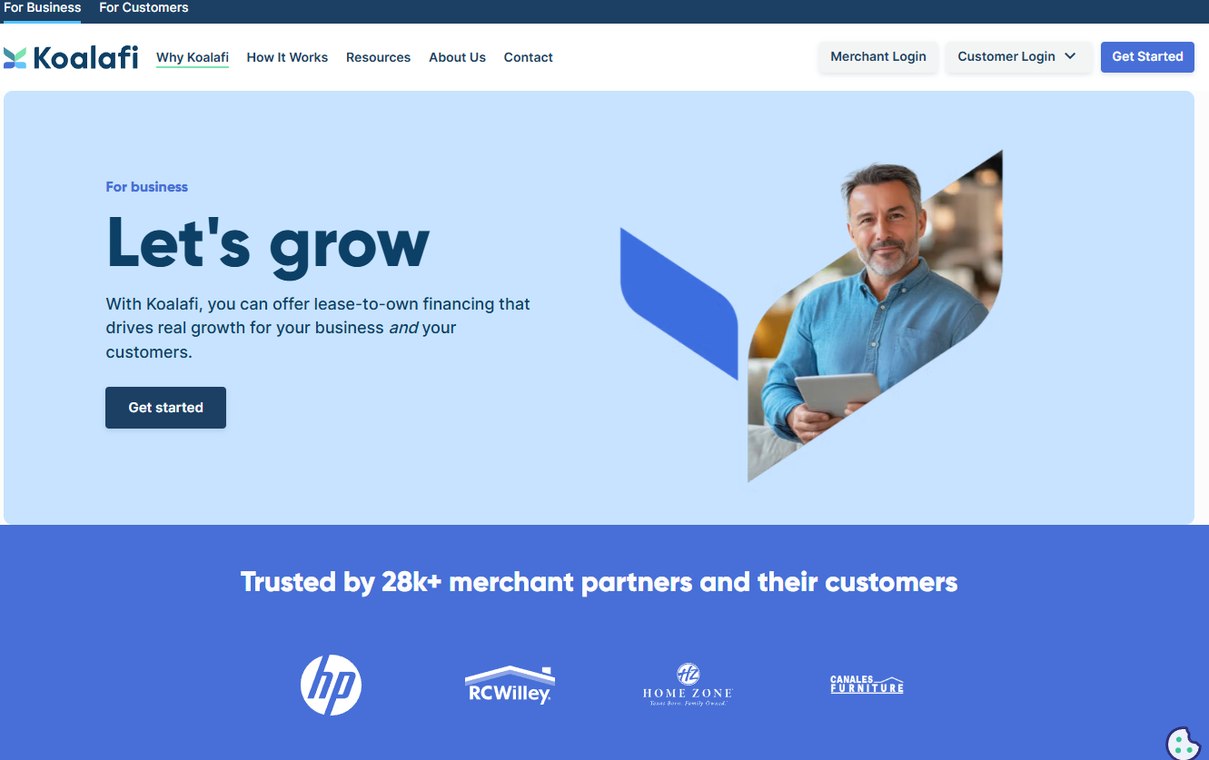
Koalafi operates primarily through a merchant-based model, which changes the game for many shoppers. Instead of going to a bank, you go to the service provider and use Koalafi’s lease-to-own financing options. This approach is built to help businesses attract customers who might otherwise walk away due to high upfront costs.
When you are at the mechanic, you aren’t applying for a generic personal loan; you are participating in a payment plan facilitated by the shop itself. This is an ideal solution for those who prefer a structured, installment-based payment plan directly through the repair shop. By integrating the financing into the purchase, it removes the friction of applying for a separate personal loan.
For example, if a local garage offers Koalafi, you can walk in with a broken brake system, leave with functioning brakes, and pay for the parts and labor in manageable monthly chunks. It is a lifeline for many who fall into that 40% of adults lacking traditional credit access.
Pros:- Directly integrated with merchant partners.
- Helps build long-term relationships with service providers.
- Designed for non-prime shoppers.
- Requires merchant participation to be useful.
2. Ualett
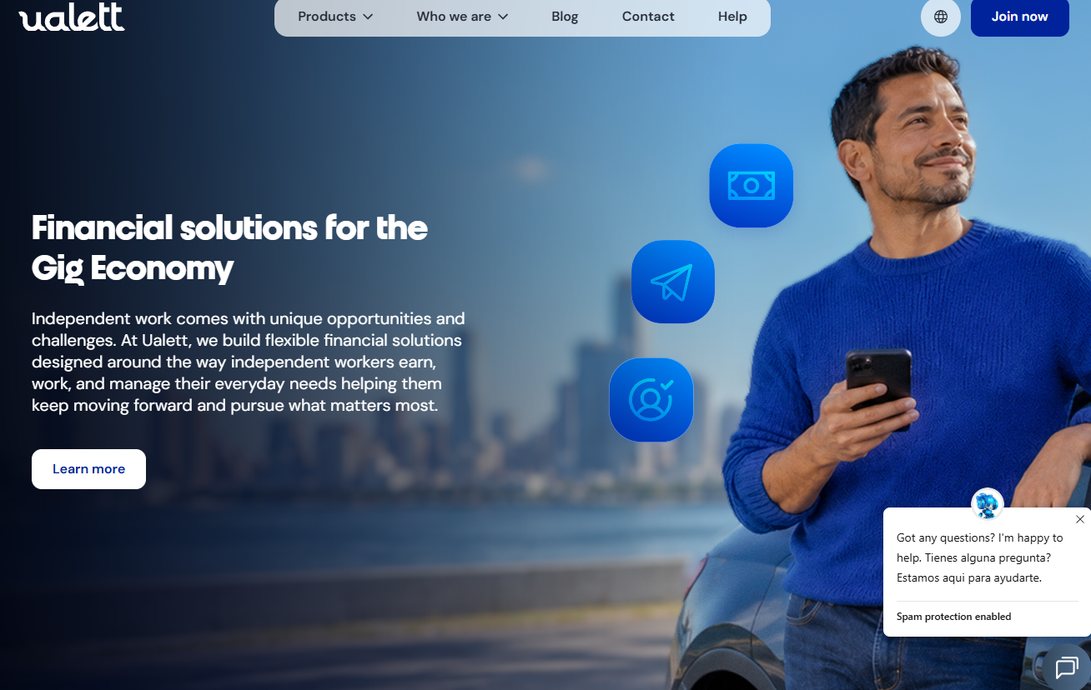
The modern economy is increasingly built on the backs of independent contractors and gig workers. These individuals often face the “feast or famine” cycle, where income fluctuates wildly from week to week. For a DoorDash driver or an Uber operator, a car repair isn’t just an inconvenience; it is a total cessation of income.
Ualett addresses this specific headache by offering GigAdvance cash advances based on recent earnings. If your car breaks down and you rely on that vehicle to earn your living, you cannot afford to wait for a standard loan approval process that requires tax returns or extensive employment verification. Ualett aims to provide fast funding to keep independent workers moving forward.
It works by looking at your actual earning history rather than just a static credit score, making it a highly specialized tool for those who live in the gig economy. If you need liquidity to maintain your primary tool of trade, this is a highly targeted option for your situation.
Pros:- Tailored for variable income earners.
- Simple, transparent financial solutions.
- Accessible through a single app.
- Primarily limited to gig economy workers.
3. FastLendGo
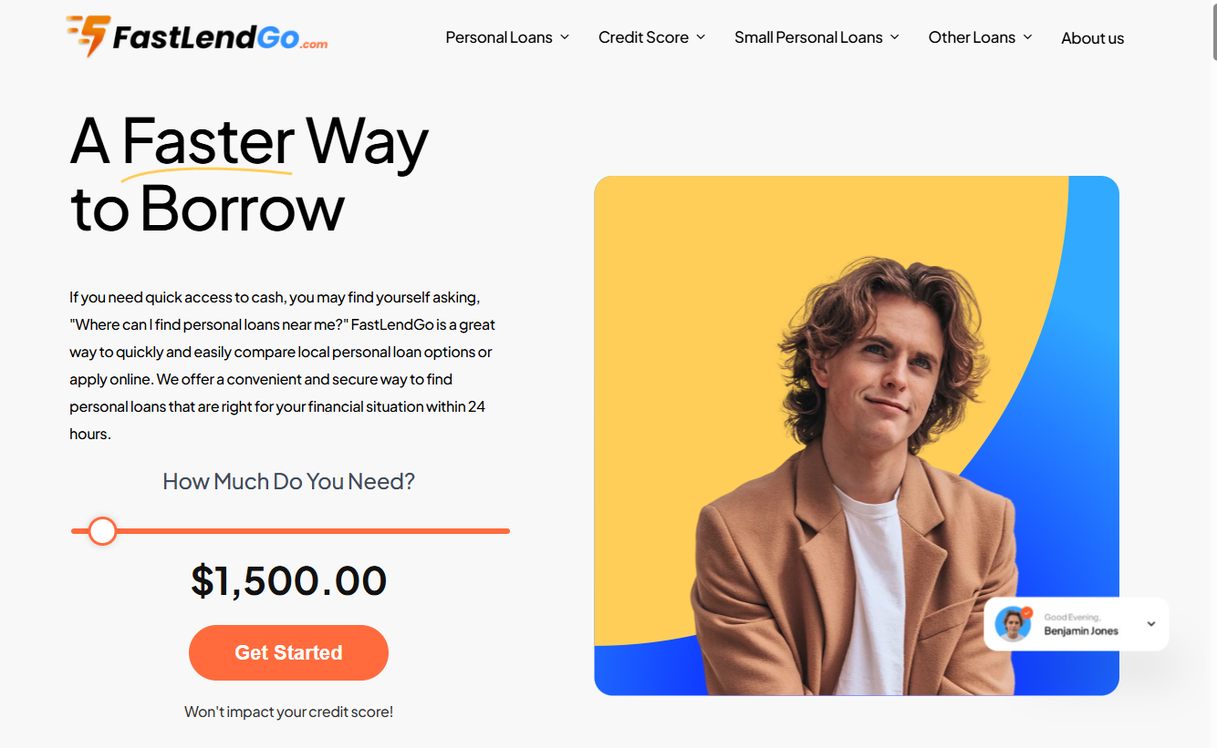
FastLendGo acts as a versatile partner for various personal financing needs, including specific options for auto repair loans. They cater to a wide spectrum of credit profiles, from those with no credit to those with fair or bad credit. This makes them a very flexible option for a broad audience.
Unlike merchant-specific financing, FastLendGo provides the cash directly to you, giving you the freedom to shop around for the best mechanic or parts provider. Whether you need a small $500 loan to fix a tire or a larger sum for a transmission overhaul, they offer different tiers of personal loans.
Their model is built around the idea of quick access to cash, helping you compare options and move through the application process without unnecessary delays. This flexibility is crucial when you are faced with a choice between two different repair shops with different pricing structures.
Pros:- Covers a wide range of loan amounts.
- Options available for bad credit scenarios.
- Addresses specific needs like auto and motorcycle loans.
- Approval is subject to individual credit profiles.
4. World Finance

World Finance is a large-scale player in the financial sector, offering a massive range of services from retail banking to complex investment management. Their breadth of services suggests a deep understanding of the various ways capital moves through the global and local economies. Because they have such a massive footprint, they are accustomed to dealing with a diverse array of consumer needs and credit tiers.
While they operate on a much larger scale than a niche repair lender, their presence in the financial landscape is undeniable. For a consumer, they represent a massive institution that deals with the complexities of modern banking and asset management across multiple sectors.
They are often a more traditional route compared to the specialized fintech solutions mentioned above. This makes them a staple for those looking for established financial institutions rather than app-based advances.
Pros:- Extensive range of financial products.
- Deep institutional expertise.
- Less specialized for quick, small-scale auto repairs.
Understanding the Total Cost of Borrowing
Before signing any agreement, you must understand the difference between the “monthly payment” and the “total cost of the repair.” This is where many consumers fall into significant financial distress. When a mechanic gives you a quote for $1,200, that is the price of the service.
However, if you use a high-interest short-term loan to cover it, you might end up paying $1,800 or $2,000 over the life of the loan. To calculate this yourself, use this simple formula: (Monthly Payment Amount x Total Number of Payments) + Any Upfront Fees. If that number is significantly higher than the mechanic’s estimate, you need to evaluate if the convenience of immediate repair outweighs the long-term cost.
For example, paying $100 a month for 12 months to fix a $600 alternator is a much different financial reality than paying $600 upfront. Always ask the lender for a full amortization schedule, which shows exactly how much of each payment goes toward interest versus the principal amount.
How to Prepare for an Emergency Loan Application
When your car is in the shop and the “check engine” light is actually a “check your bank account” light, you don’t have time to scramble for documents. Being prepared can be the difference between getting approved in ten minutes or getting a rejection letter that leaves you stranded. To streamline the process, gather the following items into a single digital folder on your phone or computer.
First, you will need proof of identity, like a valid driver’s license, and proof of income. For traditional employees, this means your two most recent pay stubs. For gig workers, this means screenshots of your earnings dashboard from your primary apps or your most recent 1099 forms. Second, have your housing information ready. A landlord contact detail or a utility bill to prove residency are standard requirements.
Finally, have the repair estimate in hand. Many lenders, especially merchant-based ones like Koalafi, need to see the specific amount you are seeking to cover to ensure the loan amount matches the service being provided. Having these ready saves you from a frantic search when the mechanic is waiting on a signature.
- Identity Verification: Driver’s license or Passport.
- Income Verification: Pay stubs, bank statements, or gig app screenshots.
- Proof of Residency: Recent utility bill or lease agreement.
- The Repair Quote: A written estimate from your mechanic.
Navigating the Repair Loan Landscape
When the pressure is on, it is easy to make a snap decision that you might regret later. One of the biggest mistakes is ignoring the fine print regarding total costs. A loan might seem easy to get, but if the interest rates or lease terms are predatory, you could end up paying for that transmission three times over. This is particularly common with “payday” style loans that carry triple-digit APRs.
Always check your credit score before you start the application process. Knowing where you stand allows you to target the right lenders and manage expectations. Some lenders might offer much better terms if they see a slight improvement in your score, so a little preparation can save you hundreds of dollars. If you know your score is in the “Fair” range (580-669), focus your energy on lenders like FastLendGo or Koalafi rather than traditional banks.
Another pitfall is failing to verify the total amount due at the end of the term. For lease-to-own models, the total cost of ownership can be significantly higher than a traditional loan. Always ask: “How much will I have paid in total by the time this is finished?” That single question can save your financial future. If the answer is a number that makes you uncomfortable, explore other options like a credit union or a small personal loan first.