

Top 7 Lenders for RV Loans for Bad Credit in 2026
Last updated: 2026-11-10
Hitting the open road becomes much more difficult when your credit score isn’t exactly where you want it to be. For many travelers, the dream of a motorhome or a sleek travel trailer feels just out of reach due to past financial hiccups. Finding a lender that looks past a number can make all the difference in your adventure. Whether it is a sudden dip in your FICO score due to high credit utilization or a historical period of late payments, the path to vehicle ownership is rarely a straight line for everyone.
Selecting the right lender requires more than just finding the lowest interest rate. You must weigh the speed of funding against the flexibility of terms. Some lenders specialize in quick cash, while others offer long-term stability for those planning to live the nomadic life full-time. It is a balancing act of speed, cost, and accessibility. A lender that offers a low interest rate but takes three weeks to approve your application might be useless if you find the perfect used Class B camper van that needs to be picked up by the weekend. Conversely, a lender that provides instant approval might charge a premium that makes the long-term cost of the loan prohibitive. You must determine whether your immediate need is for a “bridge” to get you into a vehicle or a long-term financial structure that supports your nomadic lifestyle.
- Biz2Credit
- JetzLoan
- My Financing USA
- Elite Direct Finance
- First Citizens Bank
- United Financial Credit Union
- Commerce Bank
How These Lenders Were Evaluated for Road Readiness
The evaluation process focused on accessibility for borrowers with non-traditional credit profiles. Every option was assessed based on their willingness to work with subprime scores and the clarity of their application processes. It is vital to know exactly what you are signing up for before you drive off the lot. We looked at the friction points in the application journey: How many documents are required? Is the interface mobile-friendly for those currently traveling? Do they require physical signatures, or is everything handled via e-sign?
Speed of funding and the ability to secure loans without a hard credit pull were also key metrics. Since many travelers want to snag a deal on a used RV quickly, waiting weeks for an answer is often a dealbreaker. We categorized lenders by their “readiness” level—the speed at which a borrower can move from “interested” to “funded.” The following table provides a snapshot of the core capabilities of each provider.
| Lender Name | Loan Amounts | Funding Speed | Credit Requirements | Other Specs |
|---|---|---|---|---|
| Biz2Credit | $25K – $2M+ | Decision in 24 hours | 650 FICO + $100K revenue | Business/Term Loans |
| JetzLoan | $500 – $50,000 | As little as 24 hours | No hard credit pull | Personal Loans |
| My Financing USA | See site | See site | Bad Credit Options | RV & Boat Specialist |
| Elite Direct Finance | See site | Fast Approvals | All Credit Types | Up to 20-year terms |
| First Citizens Bank | See site | See site | 670 Minimum | Personal/Commercial |
| United Financial Credit Union | See site | See site | See site | Member-based |
| Commerce Bank | See site | See site | See site | Personal/Business |
The 2026 Ranking of Specialized Lenders
1. Biz2Credit
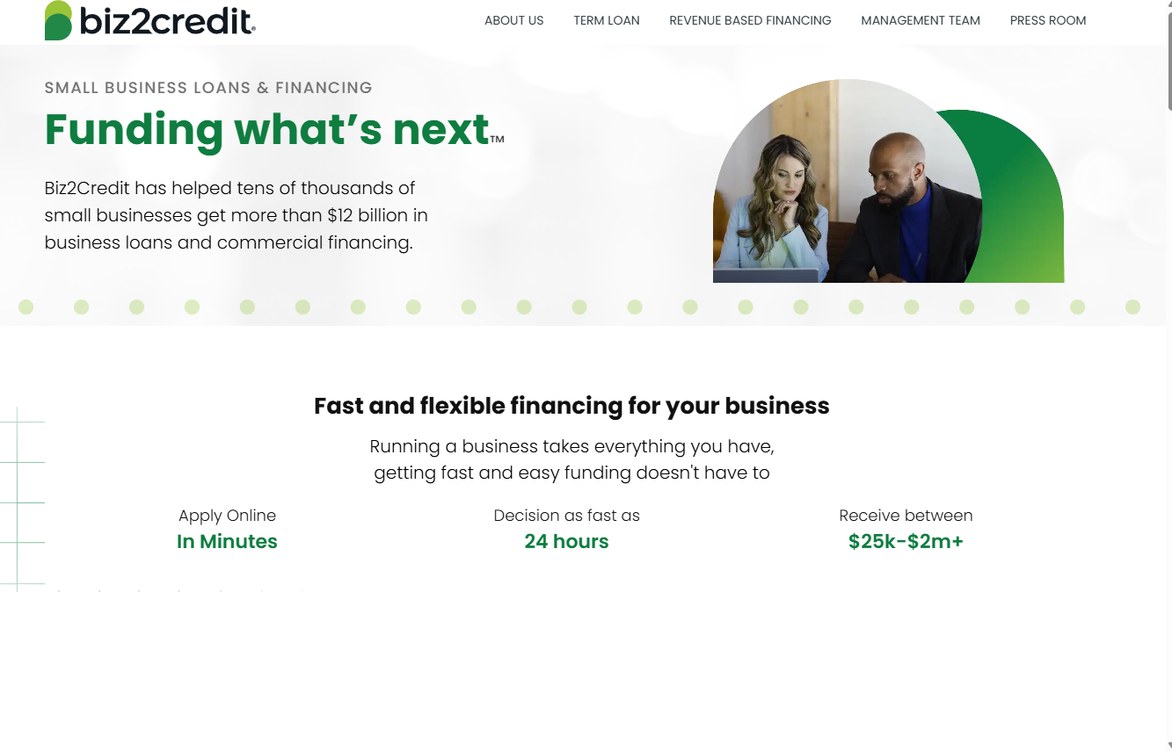
This option functions best for the entrepreneur who needs to finance an RV as part of a larger business venture. They focus heavily on term loans and revenue-based financing for small businesses. It is a powerhouse for those who have established a steady stream of income through their company. For example, if you are an owner-operator of a mobile food truck or a traveling photography business, you can leverage your business’s cash flow to secure the capital needed for a vehicle that serves as both your home and your office.
If you are looking to fund a mobile business or a rental fleet, this provider offers significant capital. They have helped tens of thousands of businesses secure billions in financing over the years. However, it is not a “quick fix” for someone without a proven revenue history. You will likely need to provide several months of bank statements and tax returns to prove the stability of your business income.
Pros:
- High loan amounts up to $2M+
- Fast decisions within 24 hours
- Flexible for business-related needs
Cons:
- Requires a 650 FICO score
- Requires $100,000 in annual revenue
2. JetzLoan
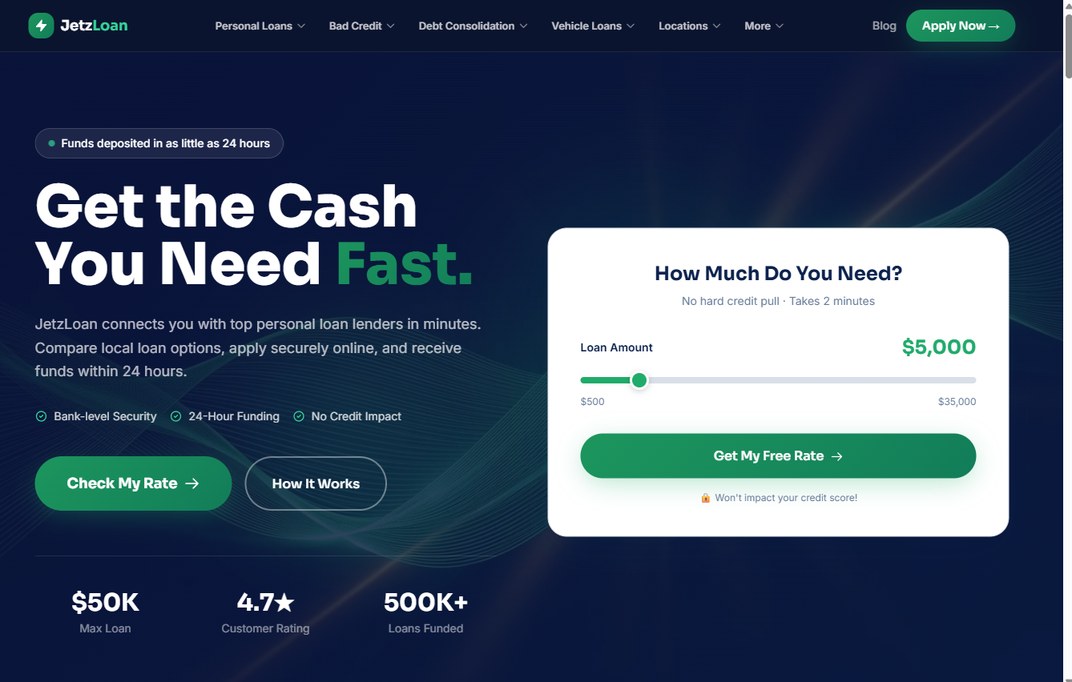
For the person who needs cash immediately to secure a vehicle, JetzLoan is a lightning-fast contender. They specialize in connecting users with top personal loan lenders in just a few minutes. The process is designed to be painless and incredibly quick for the modern borrower. This is particularly useful for “impulse buyers”—the person who finds a great deal at an RV dealership on a Saturday afternoon and needs to prove they have the funds before the seller moves on to the next buyer.
The most significant advantage here is the ability to check rates without a hard credit pull. You can see where you stand without hurting your score, which is a lifesaver if you are shopping around. This “soft pull” mechanism allows you to compare multiple options without the penalty of multiple hard inquiries appearing on your credit report. It is ideal for those needing smaller amounts for quick purchases, such as a down payment or a used trailer.
Pros:
- No hard credit pull for rates
- Funding in as little as 24 hours
- Extremely fast application process
Cons:
- Loan amounts capped at $50,000
- Primarily focused on personal loans
3. My Financing USA
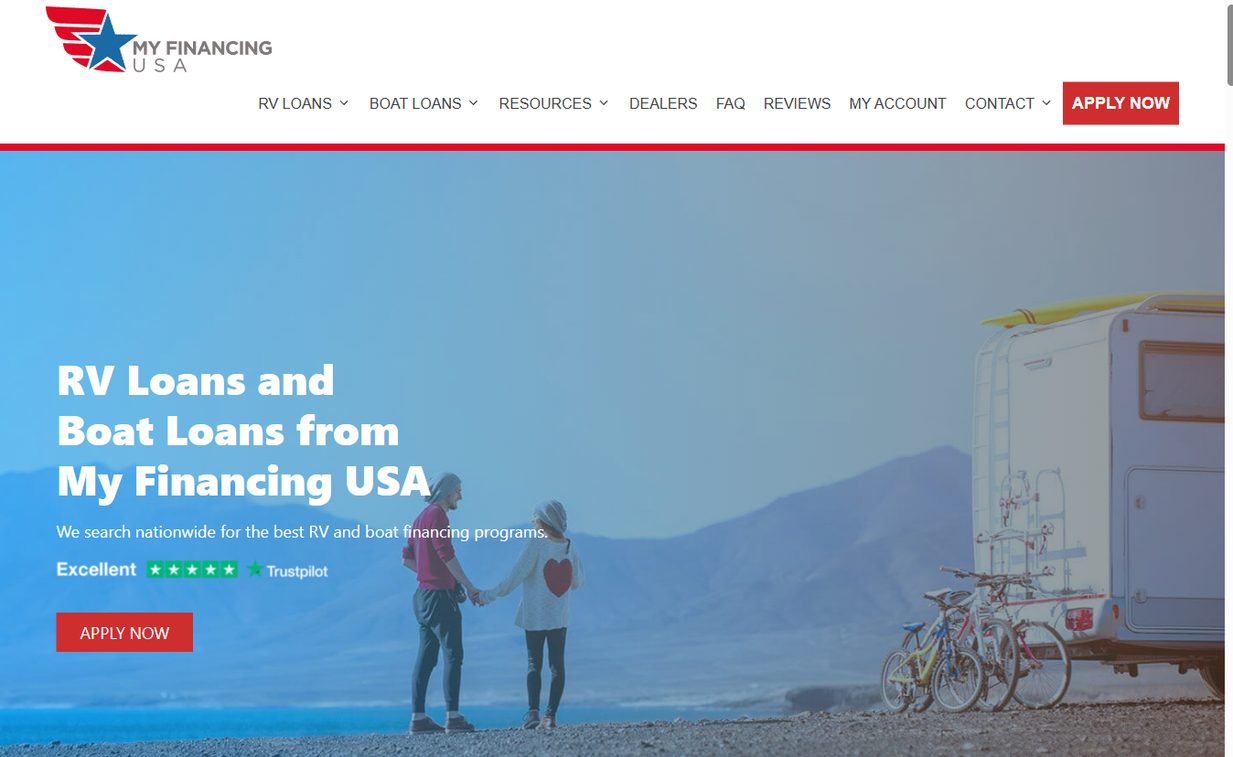
This lender is a true specialist in the recreational vehicle space. Whether you are eyeing a massive fifth wheel, a compact camper van, or a luxury motorcoach, they have seen it all. They search nationwide to find the best programs specifically for RVs and boats. Because they focus on the asset itself (the vehicle) rather than just your personal credit history, they are often more willing to take a chance on someone with a less-than-perfect score, provided the collateral (the RV) is in good condition.
They explicitly offer options for those with bad credit, making them a cornerstone for the subprime market. If your goal is a specific type of lifestyle vehicle, their specialized focus might yield better terms than a general bank. They understand the depreciation schedules of RVs, which is a nuance that generalist banks often get wrong, potentially leading to more accurate loan amounts and terms.
Pros:
- Specialized in RV and boat loans
- Options for bad credit applicants
- Nationwide search capability
Cons:
- Terms and rates vary widely
- Niche focus may limit variety
4. Elite Direct Finance
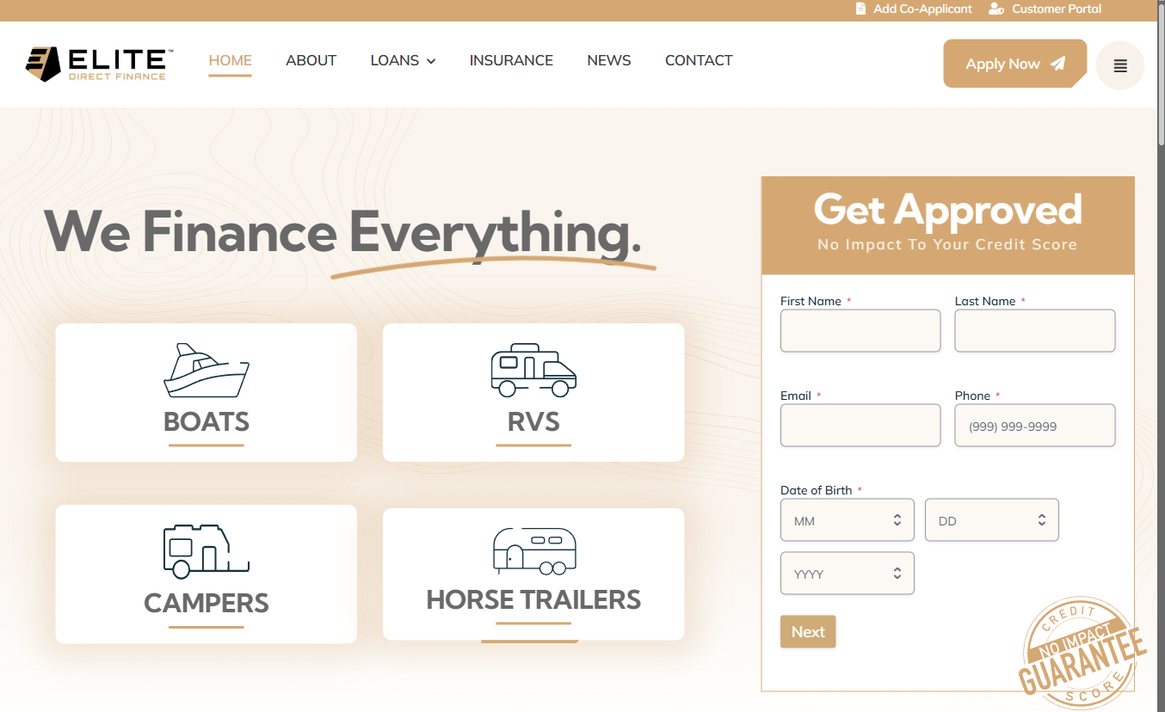
Elite Direct Finance prides itself on being a “finance everything” provider. They cater to various credit types, including subprime, which is essential for many in the RV market. They offer incredibly long terms that can extend up to 20 years. This long-term structure is a double-edged sword; while it makes the monthly payment very manageable for someone on a fixed income or a nomadic budget, it significantly increases the total interest paid over the life of the loan.
The application is designed to be seamless and hassle-free. They aim to remove the complexity often found in traditional lending. It is a solid choice for those looking for long-term stability and specialized vehicle financing. For example, if you are looking to buy a vintage Airstream that requires significant upfront renovation costs, having a lender that understands long-term ownership can be a massive advantage.
Pros:
- Terms as long as 20 years
- Covers all credit types
- No impact to credit score during approval
Cons:
- Complexity can vary by lender
- High terms can lead to high total interest
5. First Citizens Bank

First Citizens Bank offers a more traditional banking experience. They provide a wide range of personal, small business, and commercial services. For those with a slightly more stable credit profile, this can be a very reliable option. Traditional banks often have lower interest rates than specialized subprime lenders, making them the preferred choice for those who can meet their strict eligibility criteria.
However, they do have specific entry requirements. For an RV loan, they generally look for a minimum credit score of 670. If you are on the edge of being “good” rather than “bad,” this is a highly reputable place to start. You may find that their underwriting process is more rigorous, requiring more documentation regarding your employment and debt-to-income ratio than a quick-cash lender.
Pros:
- Established, reputable institution
- Wide range of banking services
- Comprehensive financial support
Cons:
- Higher credit score requirement
- Less focus on subprime borrowers
6. United Financial Credit Union
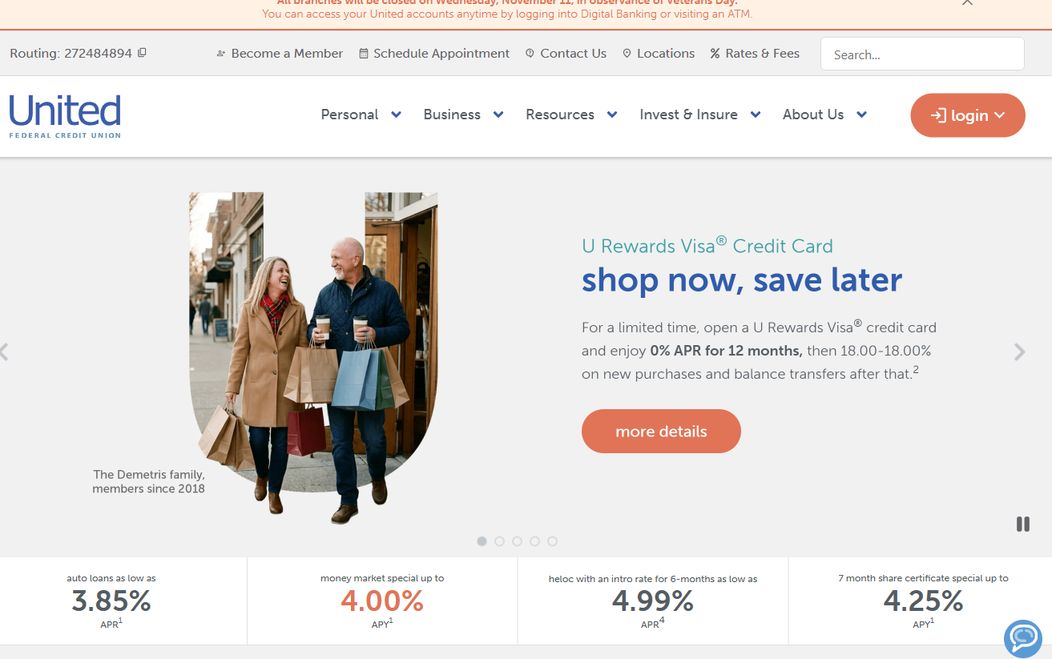
Credit unions often provide a more personal touch than big national banks. United Financial offers various products, including home equity options that could potentially be used for major purchases. Because credit unions are member-owned, they are not beholden to the same profit-maximization pressures as large commercial banks, which can sometimes translate into more flexible lending decisions for their members.
They offer competitive rates on specific products, like money market accounts and credit cards. If you are a member, you might find more flexibility and personalized service here than at a standard commercial bank. This is particularly helpful if you have a complex financial situation—such as being self-employed or having a non-standard income stream—where a human loan officer can review your case rather than an automated algorithm.
Pros:
- Member-focused service
- Competitive interest rates on certain products
- Potential for home equity solutions
Cons:
- Membership is usually required
- Availability is limited to certain areas
7. Commerce Bank
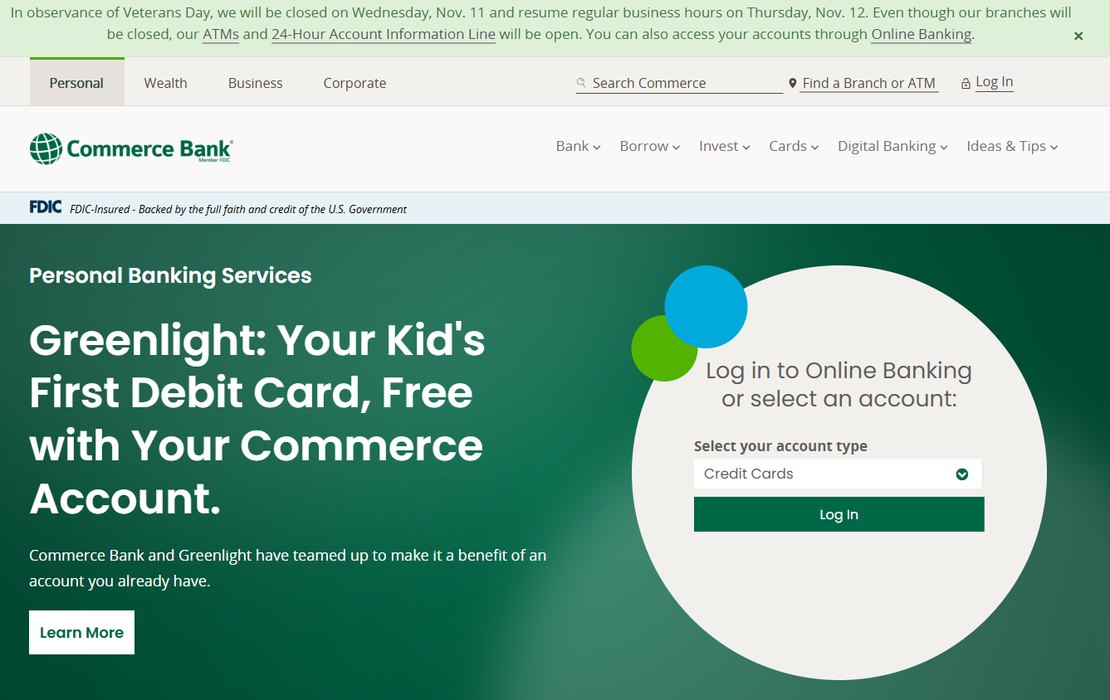
Commerce Bank is a massive, FDIC-insured institution that offers a full suite of services. They are well-suited for individuals who want to consolidate their entire financial life—from checking to mortgages—under one roof. For a traveler, having a centralized banking hub can simplify managing expenses while on the move, provided the bank has a strong digital presence and a wide network of ATMs or digital transfer capabilities.
While they may not be “niche” RV lenders, their stability and breadth of services are undeniable. They offer various personal banking products that can help you manage your money as you transition into your new lifestyle. If you are planning a major lifestyle change, such as selling a home and moving into a motorhome, a large bank can help manage the transition of those large sums of capital.
Pros:
- High levels of security and FDIC insurance
- Comprehensive banking ecosystem
- Strong digital banking tools
Cons:
- Might not specialize in subprime RV loans
- Strict traditional lending criteria
The Hidden Costs of “Easy” Financing
When you are looking at an RV or a travel trailer, it is easy to get caught up in the excitement of the vehicle itself. However, financing that vehicle involves more than just the sticker price. You must account for the “total cost of ownership,” which includes insurance, maintenance, storage fees, and campground costs. A lender might provide a loan that covers the purchase price, but if your monthly payment is too high, it may not leave you enough room in your budget to actually travel and maintain the vehicle.
Furthermore, be wary of “add-on” products that lenders may try to include in your financing, such as extended warranties or GAP insurance. While these can be beneficial in certain scenarios, they are often priced significantly higher when rolled into a high-interest loan. Always ask for the “out-the-door” price of the loan to see exactly how much you are paying in total interest and fees. Comparing the “APR” (Annual Percentage Rate) against the “Interest Rate” is crucial; the APR includes those extra fees and gives you a much more honest view of what the loan actually costs you.
Strategic Steps to Secure Better Rates
If you are currently in the process of shopping for a lender, there are several proactive steps you can take to improve your position before you even submit a formal application. These steps can turn a “no” into a “yes,” or a “high-interest” into a “fair-interest” offer.
First, consider the “Debt-to-Income” (DTI) ratio. This is the percentage of your gross monthly income that goes toward paying debts. Most lenders want to see this number below 36-43%. If you have high credit card balances, paying them down even slightly before applying can significantly lower your DTI and make you a much more attractive candidate for a loan.
Second, prepare a “Financial Dossier.” Even if the lender doesn’t ask for it upfront, having your last two years of tax returns, your most recent three months of pay stubs, and a bank statement ready can speed up the process tremendously. If you are self-employed, having a detailed profit and loss (P&L) statement can be the difference between being viewed as a “risky borrower” and a “stable entrepreneur.”
- Review your credit report: Check for errors or fraudulent accounts that might be dragging your score down.
- Save for a larger down payment: Even a 10-20% down payment can significantly reduce the lender’s risk and lower your interest rate.
- Shop around: Use the rankings above to compare at least three different types of lenders (a bank, a credit union, and a specialist).
- Understand the terms: Always ask if there is a “prepayment penalty.” You don’t want to be stuck paying high interest if you come into extra cash and want to pay the loan off early.
Finally, remember that the goal is not just to get a loan, but to get a loan that facilitates freedom. If the financing feels like it’s going to become a burden that keeps you stuck in one place, it might be better to wait, build your credit, and aim for a better deal next year. The road is long, and you want to be able to enjoy the view without the weight of an unmanageable debt hanging over your head.
Navigating the Road Ahead
Before signing on the dotted line, take a moment to breathe and look at the fine print. One common mistake is focusing solely on the monthly payment while ignoring the total cost of the loan. A low monthly payment often means a much longer term, which can cost you thousands more in interest over time. Always do the math on the total interest paid over the life of the loan to see the true price of the vehicle.
Another pitfall is failing to disclose all your debts. Lenders will find them eventually, and being upfront can save you from a sudden rejection. Transparency is your best friend in the lending process. Also, remember that “bad credit” is not a permanent state. Using these loans to build a history of on-time payments can eventually open doors to even better rates in the future. If you manage a subprime loan perfectly for 12 to 24 months, you may find yourself in a position to refinance into a much more favorable loan, essentially “upgrading” your financial status while you are already on the road.